Thousands of kilometers from the “mainland” are the emerald isles of the Andaman and Nicobar. This archipelago of around 500 islands is where “kaal” (time) used to stop and the “paani” (waters) were considered as the gateway to Hell known as kalapaani.
From being a penal colony, the Islands, enveloped by the enticing azure blue Andaman Sea, with all its brilliant shades, have transformed into a travelers’ paradise!
The Andaman and Nicobar Islands are located on the eastern fringe of the Bay of Bengal, with the Andaman Sea separating it from Southeast Asia. A cursory glance at a map will depict the Islands as part of a discontinuous volcanic chain starting from Cape Negrais and Coco Islands (Myanmar) in the North, through the Andamans, down to the Nicobar Islands with the southernmost point of India separating it from Aceh (Indonesia) by the Six Degree Channel. During the drifting of land masses in prehistoric times, the Andaman Sea may have been an extension of mainland Asia before waters came in and left only the tips exposed as the beautiful Islands. The Andaman and Nicobar group are themselves separated by the Ten Degree Channel. Nothing to do with mathematics, the “degrees” are named after the latitudes in which they lie.

The Andaman and Nicobar Islands is a Union Territory in the Republic of India which means it governed directly by the Centre. The Island sends one elected representative to the Lower House (Lok Sabha) and does not have any legislature of its own. The Andaman Islands are classified into the North, Middle, South and Little group of islands while the Nicobar Islands has the Car, Little and Great groups. The capital is Port Blair, situated on the South Andaman and named after a marine surveyor, Archibald Blair. The Islands were colonized soon thereafter, though malaria and resistance by tribes saw numerous attempts by the British (and the Danes) fail. It was only after the first war of Independence in 1857, that a permanent penal colony was set up.

However, the history of the Islands goes beyond the era of imperialism and colonization. The Andamans are mentioned as Handuman, after Lord Hanuman. Legend has it that the islands were supposed to be the springboard to taking the attack on Ravana’s Lanka before the alternate (and eventual) Rameshwaram route was planned. The Islands have also found mention in the writings of Ptolemy, Chinese and Arab travellers. Nicobar has been mentioned as Nakavarram in South Indian texts. These have been home to various tribes such as Onges, Jarawas and Sentilese, who may have their origins in the African continent. The Nicobarese ancestry could be traced to the Mongoloid people.
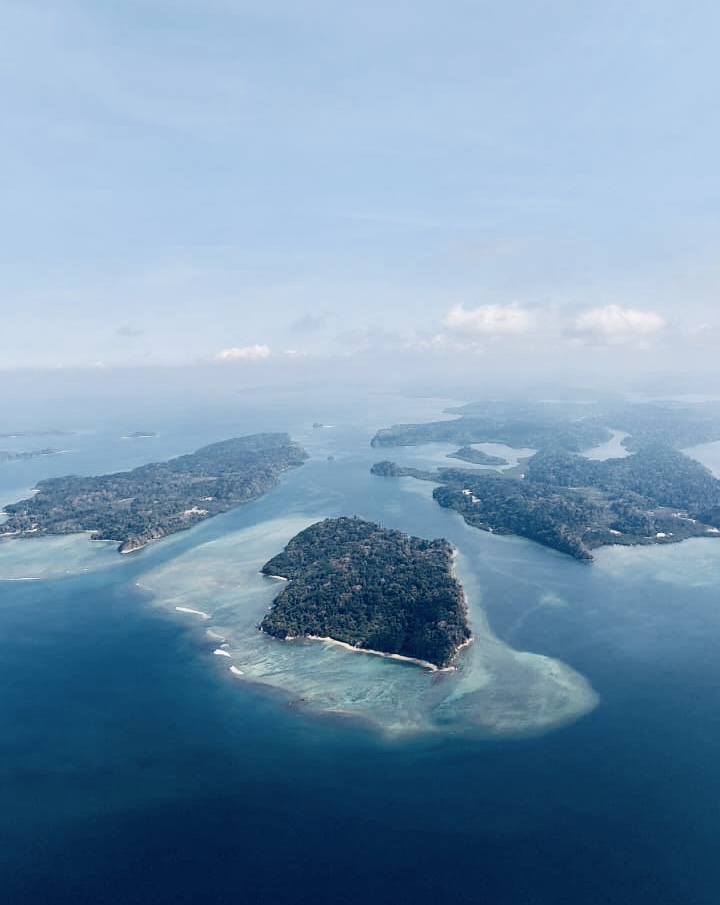
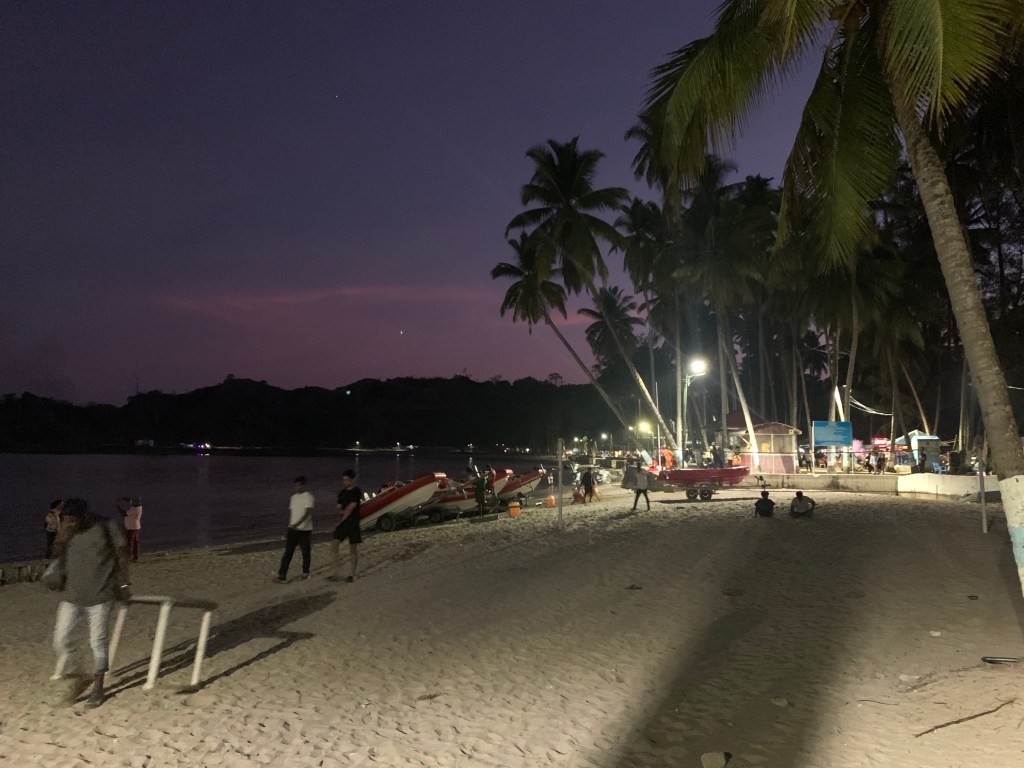
As one flies into the Islands, over the Bay of Bengal, an enchanting landscape with jewelled islands meet the eye. These volcanic islands are fringed by coral reefs giving the waters their different hues. Barren island has the only active volcano with the remaining being extinct. Landing in Port Blair, one is greeted by clean fresh air and blue sunny skies (unless it’s raining). A sprawling new airport is nearing completion and will improve connectivity and give a fillip to tourism. The capital, with an estimated population of around 150,000 is cozy and quaint. It’s busy bazaars (Aberdeen being the more famous of them), administrative offices, hotels and museums and eateries give the city a warm feel while the picturesque waterfront and Corbyn Cove add to the charm. At Flag Point, the Tricolour flutters majestically, acknowledging the lives lost to the Independence struggle. North Bay and Ross Island loom from the northern and eastern shores with ferries available for travel to these places which are famous for snorkelling and other water activities.
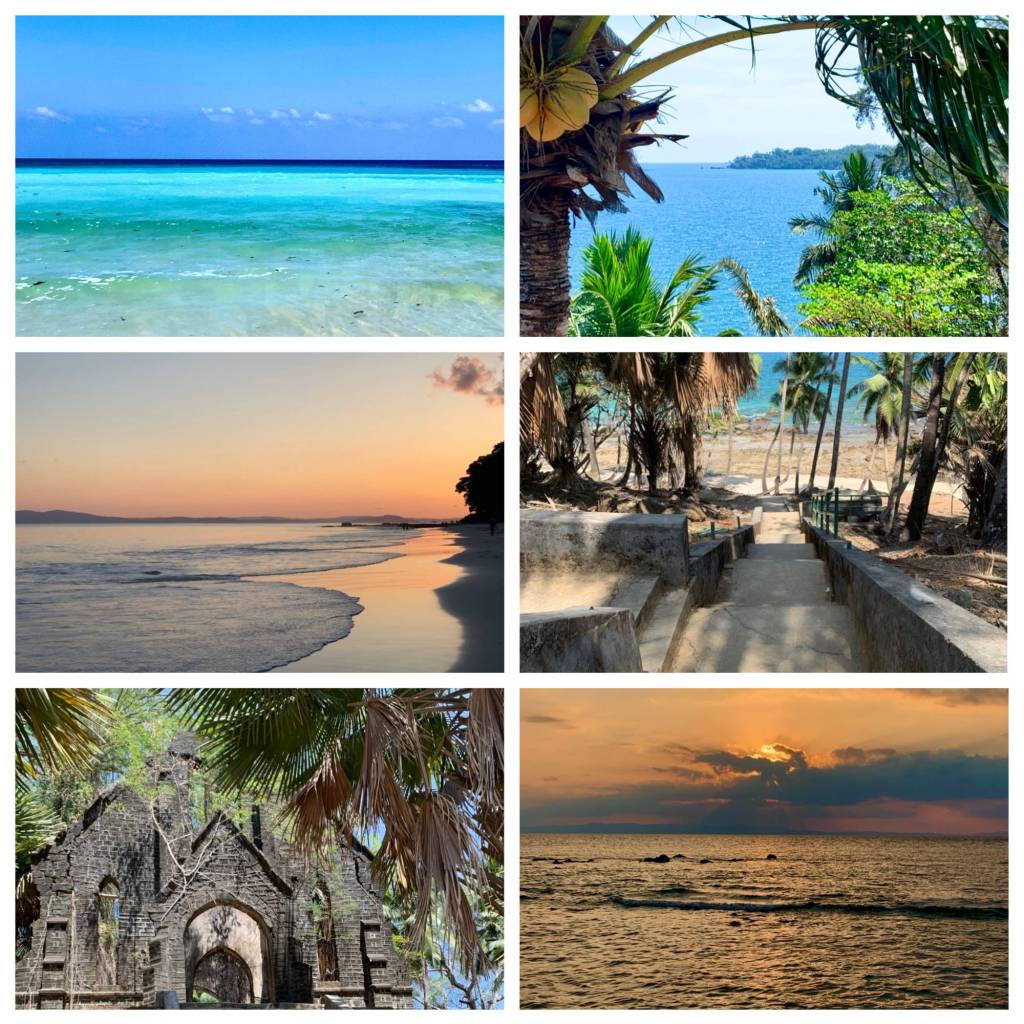
Ross Island – now renamed as Netaji Shubhash Chandra Bose Island (NSCBI) – is a ten-minute ferry ride away. The Island, which was home to the British administration, was replete with bowling grounds, churches, residences and ball rooms. Shelled in World War -II by the Japanese, the place is in ruins and makes for an interesting trek up the hill. Tame deer roam the island with gay abandon and are always ready to be up, close and personal.There are golf carts available for not so nimble legs and administration officials/guides to lend a helping hand. Freyer’s beach, is a less known but beautiful sand-and-rock beach, where the crystal-clear waters of the Andaman Sea bring up different hues as one gazes to the horizon. NSCBI is credited with bearing the brunt of the Tsunami of 2004 sparing the bustling Port Blair of major damage. The approach to Freyer’s beach was partially washed away, a sad reminder of the tragedy which befell the region, the reclusively though adds to its enduring allure.

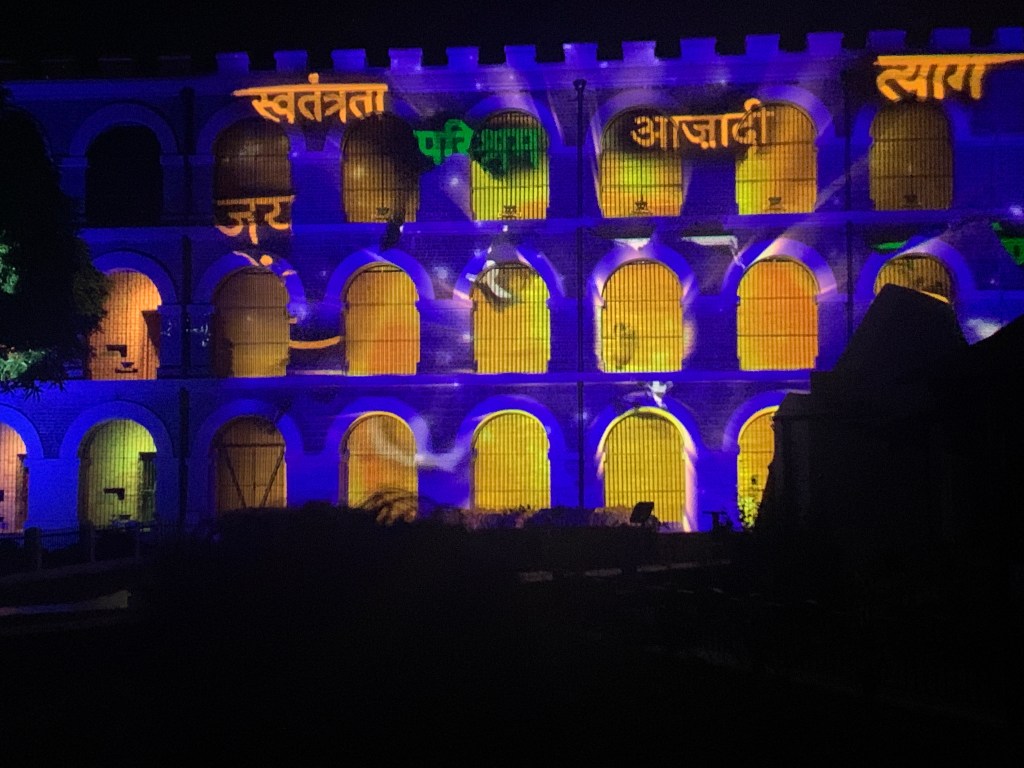
Port Blair’s most (in)famous landmark is the Cellular Jail. Constructed as a seven spoke star with multiple stories, it became synonymous with colonial terror and oppression. It was our very own “Australia” where revolutionaries and people convicted under colonial laws were sent. Now a National Monument, the guided tours recount the harsh and oppressive conditions which the inmates had to face, with the objective of breaking their morale apart from many sinews and bones. There are many heroic stories which echo from the thick walls of the Jail captures brilliantly by the brilliant Light and Sound show in the evenings. Three stories do stand out – of Veer Sarvarkar, the most popular inmate, whose freedom struggle has been an inspiration and after whom the airport at Port Blair is now named; Pathan Sher Ali Afridi, who assassinated the visiting Viceroy Lord Mayo and was hanged; and Dudhnath Tiwari, imprisoned after the 1857 uprising, who escaped, was captured by the tribals, married and integrated with them and then again escaped, informing the British about an imminent tribal assault, winning his freedom through a pardon thereafter. His unique story would require separate space elsewhere.
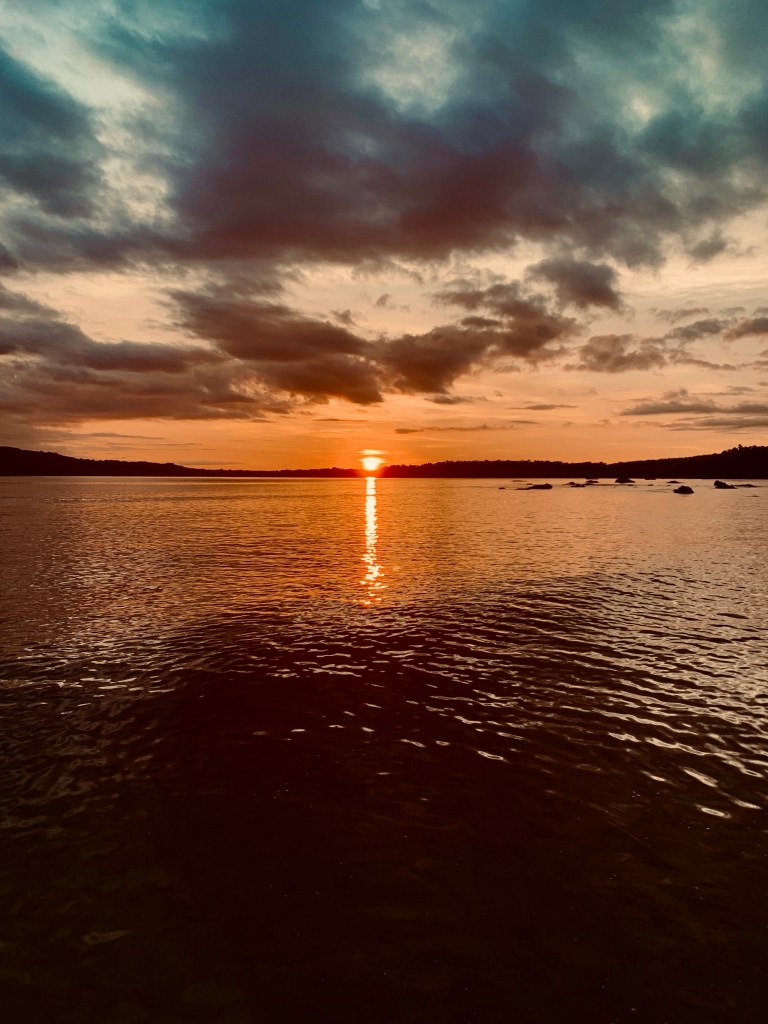
Port Blair has eateries of all different shades and sizes. From pure vegetarian joints to seafood paradises, it caters all all budgets and classes. It is also the junction for travel up the Middle and North Andamans, for those interested to see limestone caves and a regulated tour through Jarawa territory (only through permits). It is also points you to Wandoor beach and Red Skin Island and further south to the Chidiya Tapoo and Munda Pahar beach. Chidya Tapoo and Munda Pahar are excellent places to visit sunsets. Though not regular sandy beaches, they have mangroves nearby and also a trek up a hill through pristine forests. Birds chirp around making the walk a delight for bird watchers., Salt water crocodiles have rarely been encountered but the reported sightings are more for newspaper eyeballs than actuals. The drive to Munda Pahar takes around 40 minutes and travel may be timed to leave in the afternoon and be back in the city just after sunset. The Naval and Anthropological museums are other good places to visit, with the former a tad better maintained and the latter having a bigger collection.
After a few days in Port Blair, it is time to hop on to other islands. There are the Nicobar Islands down south, most of which need permission to visit; the islands up north through the Middle and North Andaman; or the forbidden North Sentinel Island where the Sentinelese live in a self-imposed recluse. The Government does not permit any visits to this Island, which is patrolled by the Navy to deter any rash adventurers. An American tried to swim here many years ago. Reportedly he was killed, but his mortal remains have still not been recovered. There is also Barren Island which has India’s only active volcano and for which special tours operate.

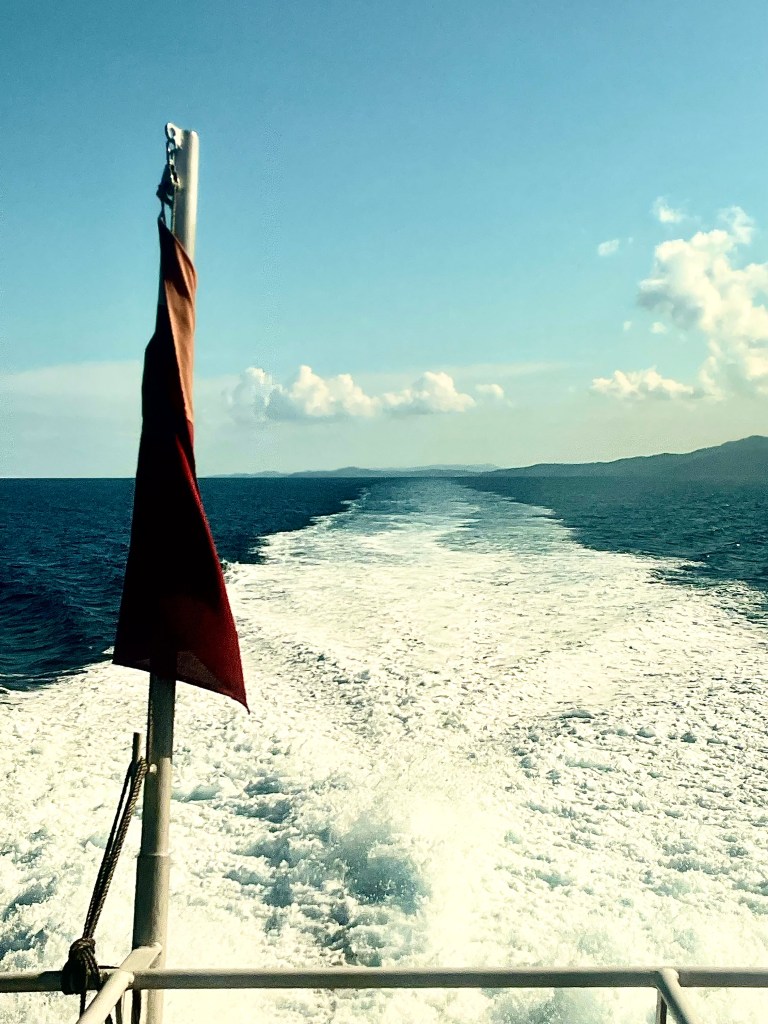
However the most popular island destinations continue to be Havelock Island (now renamed as Swaraj Dweep) and Neil Island (now renamed as Shaheed Dweep). Havelock is the more famous and visited of the two. Located around 50 km, as the crow flies, in a northeast direction, Havelock has gained fame for its world renowned Radhanagar Beach, rated as one of the best in the world. Many private and Government ferry services ply between the islands. The private fast-moving catamarans take around two hours to reach Havelock from Port Blair. The ferries are large with a capacity of around 300 with different classes as in trains. They are usually air-conditioned. The windows are sealed, and outside strolls are not permitted, so one travels in comfort albeit sans the smells and taste of the sea!
As one disembarks, the hustle in the narrow lane outside the jetty momentarily takes you aback. Havelock has scores of hotels and resorts – from the high-end Taj Exotica, the eco-tourist Barefoot to other popular hotel chains including several budget options, and thus pick up vehicles and taxis jostle for space and attention. Havelock, however, is a small island with a population of around seven thousand and one soon loses the cacophony as you head out of the jetty. The islanders are mainly Bengali in origin (mostly re-settlers from East Pakistan after partition in 1947 and Bangladesh war of liberation in 1971), though there are South Indians and tribals too.

One striking thing about Havelock is that it has a strong connection with Shri Krishna, and thus the names of the villages (and beaches) e.g. Radhanagar, Govindnagar, Vijaynagar. This may be due to the strong Krishna cult in Bengali culture and folklore. The beaches are mostly on the eastern shore including Kala Pathar (Black stone) due to the rocks, Govind Nagar (a popular beach replete with all the island hustle and bustle) and Vijaynagar beach, all popular as sunrise viewpoints. The Elephant Beach on the northern shore is the gateway for commercial sea activities ranging from snorkeling, scuba, sea walking, para sailing and much more. Motorboats take ply from the jetty to Elephant Beach which is otherwise accessible through a couple of hours trek through the jungle. While the sea activities are numerous, catering to all ages, the restrictions of timings (morning till post noon) and the limited space, see operators running after tourists (and vice versa) making it a bit of a jamboree in the otherwise serene warm waters. I saw a small school of colourful fish in the shallow waters and admired their tenacity and audacity to be swimming amongst countless legs, arms and splashes.
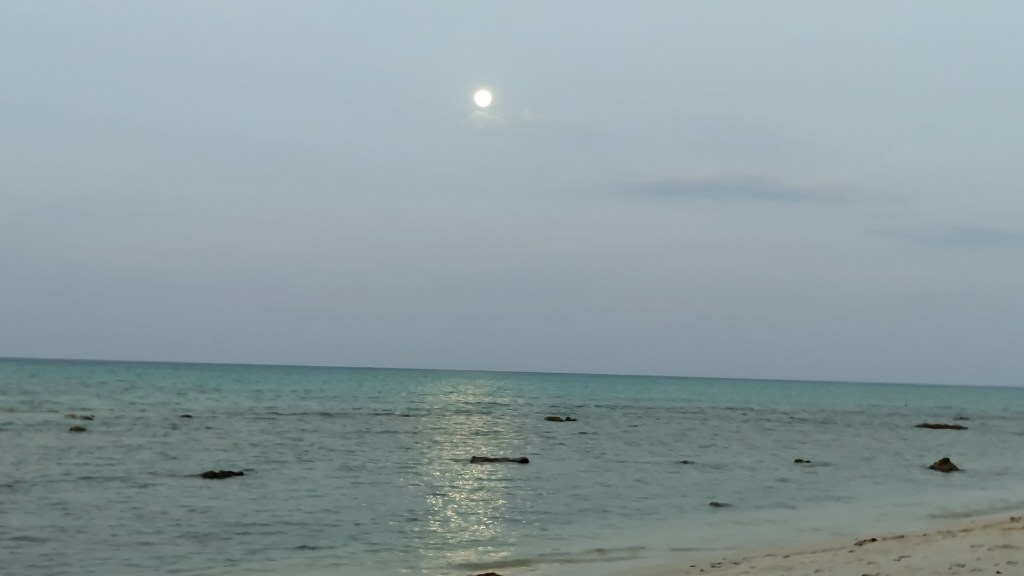
Radhanagar Beach on the western shore, requires exclusive space, deservedly, as the most exclusive pristine beach one can come across. It is Maldives, sans the cost, Bali sans the distance, Florida, sans the commerciality and Rio, sans the party. Stretching for almost 25 minutes of quick walk from one end to the other, it is where golden sands meet warm clean waters with clarity up to 6 feet and more. Lazing on the palm fringed beach, endless shades of blue and green can be discerned in the distance. Clean as a whistle, the soft sands beckon one to discard any footwear and wade in the inviting waters. It would put any beach in India (and elsewhere too) to shame, reminding us of what was, before civilization took over. For sunset gazers, swimmers, walkers and simple toe-in-the-water doers, there is something for everyone. Truly, it is the pièce de résistance of the Andamans, and deserves all the accolades that keep pouring in.

Surprisingly, the signal strength of mobile phone connectivity is optimal and there are good shops for souvenir shopping. However, one is reminded that collecting corals is illegal and even if one procures some from the beaches, at baggage screening at the ports or seaports, these would be confiscated. It is also noteworthy to know that only the northern half of the Island is habited and accessible by roads. Though this does not deter adventurists to trek down south!

From Swaraj Deep, it is time to move onto its smaller cousin Shaheed – the rechristened name for Neil Island. About an hour away by ferry, from Havelock, it is approachable both from Havelock and directly from Port Blair. This island has a north-south orientation as compared to the east-west bearings of Havelock.

Neil Island was named after James Neil, the infamous British military officer who commandeered East India Company troops during the 1857 War of Independence. His contemporary Henry Havelock had the other island named after him. So, the ‘victors’ get islands named after them while the ‘vanquished’ are consigned to prison cells. C’est la vie!
However, it is not every day one visits a namesake island, no matter how undesirable the eponym. The conversation at the hotel reception went something like this ” Good morning, we have a reservation with you”. “Good morning”, the concierge replies, “under what name?”. “It is Neil”, I said. “Thank you, sir, you are indeed at Neil Island, but your name please”, “It is Neil” I replied and handed him over our identification and reservation mail. The look on his face said it all!

If Lord Krishna has made Havelock his home with Govindnagar, Radhanagar et all; Shri Ram had “Neil” firmly in his sights. The beaches and attached villages are named after the famous Ayodhya clan. So, we have Bharatpur, Sitapur and a couple of Laxmanpurs. Bharatpur beach is next to the jetty and is again a treat to the eyes. In low tide, one can wade endlessly though the transparent waters with an occasional coral club to navigate around. It is also the site for embarking on sea activities, especially scuba diving. While Elephant beach at Havelock may be more extensive and spoiled (quite literally) for choices, Bharatpur is laid-back with fewer but better options.
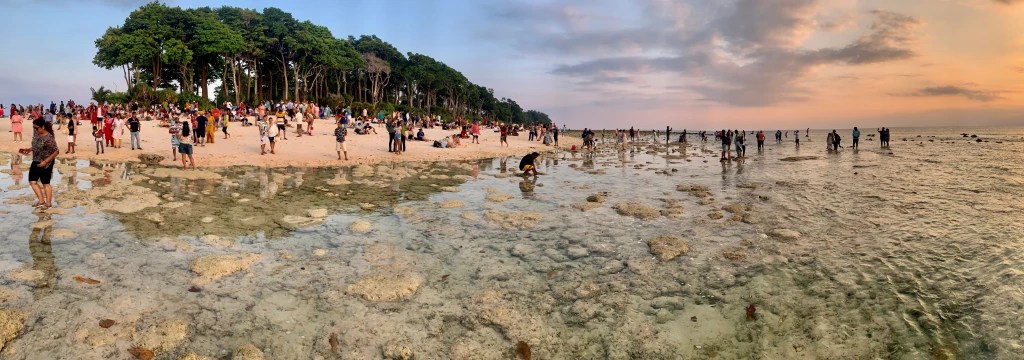
Laxmanpur Beach is the place to witness spectacular sunsets and thus every evening (weather permitting). Everyone in the Island descends to this place to have their piece of (and place in) the sun.
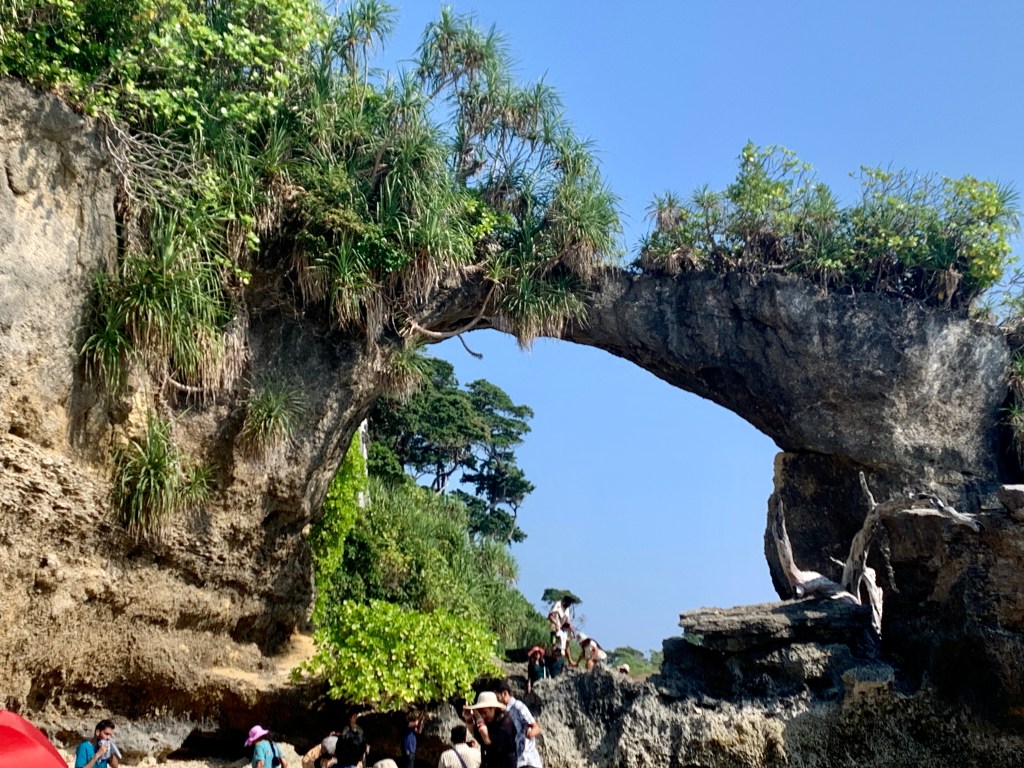
The other Laxmanpur Beach is rocky and has a natural stone arch formation which is locally known as the Natural or Howrah Bridge. Approach to the formation is through the rocky terrain, with a descent from the main road through a path lined with shops selling coconut water and raw mango juice (aam panna). The rocks form small pools where water (and fish) get trapped once the high tide bids adieu, only to replenish in the next cycle. Guides will point to live coral, shells, crabs and colorful fish in these pools along with small jelly fish swimming around.
Even for non-swimmers, a scuba dive is a must-do activity, unless a medical condition restricts otherwise. From Bharatpur Beach, one is taken away from the shoreline on a boat. Scuba guides give a lowdown on the basic dos and don’ts while donning a diving suit, weights and harnessing an oxygen tank along with a face kit. Getting into the water is a mini thrill of its own. One is seated on the edge of the boat, back towards the water and then flipped over. For a second, panic sets in as one drops in the ocean. Then the still water envelopes the diver with a reassuring embrace. As one descends, she/he enter a different world, where time stops, and worldly worries dissipate to the surface with the bubbles after each breath. After several meters, one reaches the corals and while wading around, fishes dart in and out, oblivious to human presence. These aquatics, large and small; of different colours and shades; some swimming alone, others in schools light up the transparent aquamarine background. It is one’s own world of Nemo.
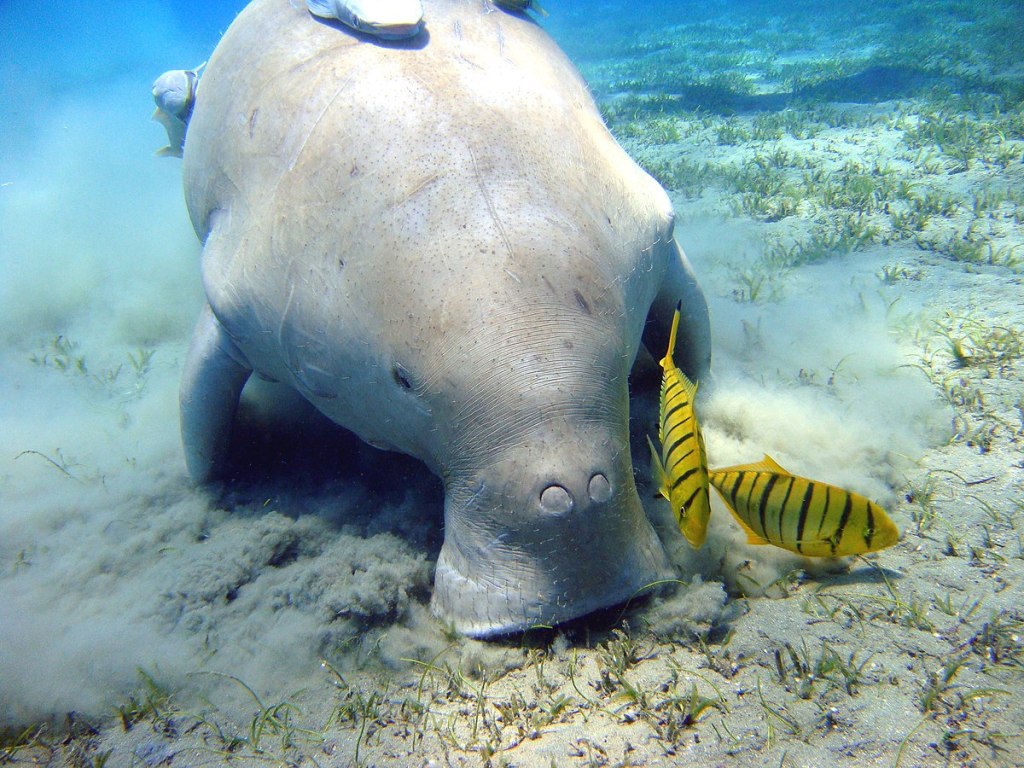
The scuba diving attendant guides the diver to different corals and fishes and will happily take pictures (if you have signed up for the service). After 20-25 minutes, she/he come up, away from paradise, back to reality. If one is really lucky, she/he may sight the Dugong – the State animal of the Andaman and Nicobar Islands – a shy herbivore commonly known as a Sea Cow
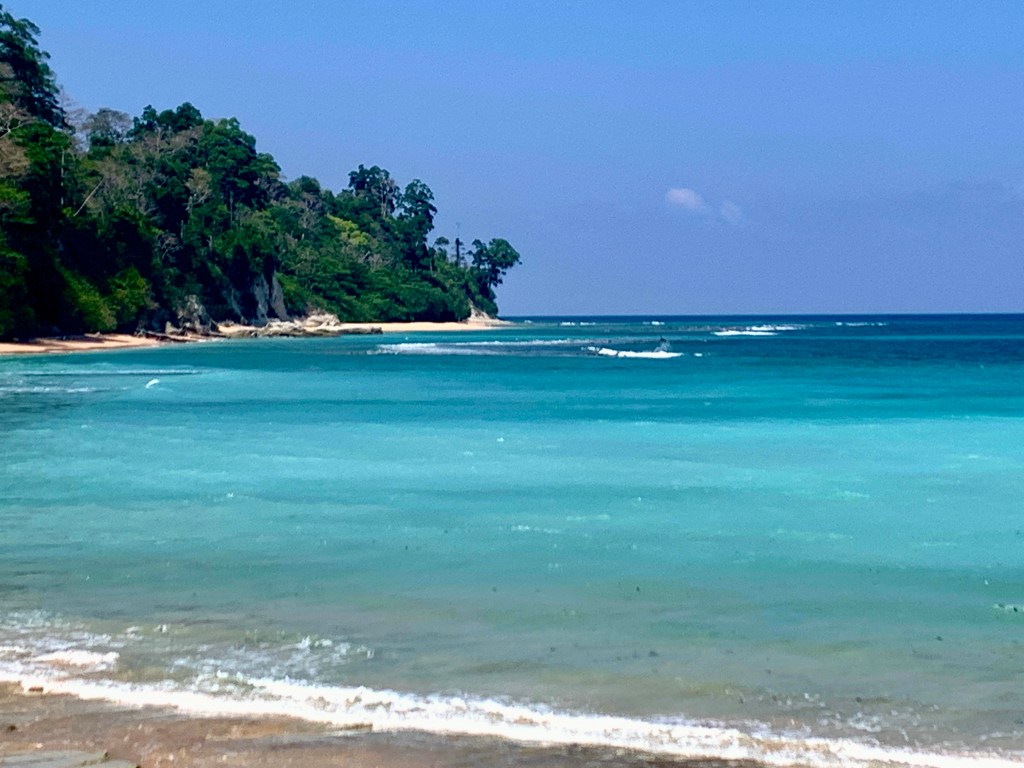
Sitapur Beach, is another spectacle. Situated on the east end, it bore the brunt of the Tsunami (like Ross Island) and part of the beach is destroyed. However, the view from the top is spectacular with distinct different colors of the Andaman Sea to discern and admire. Navigating to the beach is a bit tricky with the approach path a bit damaged (again like Ross), but the reward to frolic through the pristine sands and clear waters negates minor inconveniences. Swimming is forbidden (due to rocks) but in spite of this, Sitapur would rate amongst the top waterfronts underdogs of Andamans.
Neil Island is small and thus it does not take much time to cover ground with the terra firma generally plain. Two wheelers and cycles are easily available to rent. Unlike Havelock, eating options are few, so it is better to eat at your place of stay. Neil is a bit of an agricultural basket for the islands around apart from the mainstay of the tourism industry.
The Andamans have plenty of sunshine and wind. It is a perfect recipe for self-generated sustainable power generation. At present fuel is shipped from the mainland and though it is subsidized, but the dependency on travel involved, make the inhabitants hostage to vagaries of time, logistics and weather. Solar and Wind power generation would be an ecofriendly sustainable solution to mitigate the power gap while boosting local productivity and tourism. Electric vehicles would reduce the dependency on diesel and petrol which are already proving detrimental to the ecosystem with the increasing tourism traffic. Noiseless and non-polluting electric vehicles would help the restore man’s harmony with nature in these Islands. Some islands like Neil’s are viable for cultivation and, concerted efforts in farming could make the area quite self-sufficient.
The Andamans are India’s very own Maldives, Bali and Thailand. Located in the crucial shipping lanes connecting the West to the East, the Islands were discovered by colonizers for imperialistic gains, which set off a series of sad chapters in their long history. Thankfully, the beautiful islands have shrugged off their dark past and are home to thousands of people who have settled here by design and by default. It is a paradise, with immense potential as a tourism destination and a strategic trading post. A visit to the Andaman and Nicobar Islands should be in everyone’s travel list.
The traveler Ibn Batuta while describing Andamans said ” Travel is not just about the destination; it is about the transformative journey within. As I ventured through the captivating landscapes of Andaman and Nicobar, I realized that true exploration extends far beyond the physical realm. It awakens our senses, broadens our perspectives, and enriches our souls.”
Nothing could be truer!!


 Curiously
Leave a comment