“🎵Aaj mere yaar ki shaadi hai, aaj mere yaar ki shaadi hai” (Today is my friend’s wedding, today is my friend’s wedding)🎵” – timeless classic wedding song from a hindi movie of the 70s.
She was majestic, with a pure white coat that shone like a snow-capped mountain in the sun. Her long black hair contrasted with her pale skin. Her chestnut eyes sparkled with intelligence and kindness. She had a refined head, with a straight profile. She had a strong neck, a deep chest, and complementing curves ending with long slender legs. She felt the groom’s excitement and nervousness. She sensed his gratitude, as he stroked her neck and whispered in her ear. “ Poor chap, perhaps this is his first time,” Rani thought with a hint of mischievousness.
Rani was more than a mare; she was a symbol of honour and virility. She was the queen of the Baarat (wedding procession).
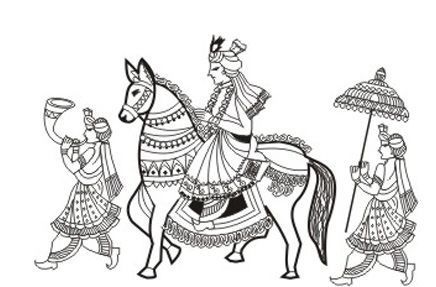
As the groom mounted her, Rani’s black tail swished about, like the peacock feathered Pankhaa (fans) of the great emperors. She had a pink muzzle and striped hooves. Her white fetlocks bore the weight of the colourful saddlecloth, embroidered with gold and silver threads, and a matching bridle, adorned with bells and tassels.
The groom held the reins and waved to the crowd. It was his day and there was an elaborate ceremony as he got onto Rani. The musicians had lined up and had started playing popular musical numbers. The cymbals clanged and the trumpets blared. The music alternated between noise, but who really cared?
Rani’s ears twitched in the din of the crowd. She saw pretty ladies in their new dresses and handsome men in their suits, surrounding the groom. She smelled the alcohol that was discreetly passed around. She remembered the old days, when weddings were simpler and happier. When there was live music and dancing, not loudspeakers and showbiz. When there was respect for tradition and nature, not frivolity and extravagance. She knew the world was changing, and not for the better. She heard the word “pollution” in many conversations, but she wondered if anyone cared about the noise that hurt her ears. She felt the pressure of the event managers and the clients, who wanted to make the most of their money and time. They made the processions longer and fancier, but also more boring and meaningless. They replaced the rituals with entertainment, but also lost the essence of the culture. They wanted to be the best and the brightest, but also the loudest and the most wasteful. Rani was a wise mare, and she pitied them.
Rani’s life had been dull and routine in the “Mastaan Band.” She led a lonely life as she was the only horse around and had no one to talk to. She missed her parents, who had been her companions and fussed over her. The old master had treated them well, feeding and letting them rest in the green fields. However, they grew old and could not go to the weddings. One night, he took them away. She overheard the musicians saying that he had set them free, as they were too old and weak to work. But some doubted this, and whispered that he had sold them to the leather factories. She never knew the truth, and she never saw them again
How she envied Black Beauty, the celebrated horse who, in comparison, lived in a faraway land and epitomised freedom, adventure and love. Black Beauty, a gentle and kind horse, was born on a farm and enjoyed a comfortable life with a squire. Later he was sold to various owners, some good and some cruel and suffered from overwork, mistreatment, and accidents. He finally found a happy home and found fulfilment and contentment.
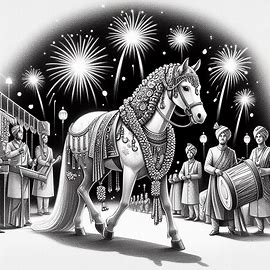
Her attention was drawn back to the present. Someone had started lighting firecrackers. “Swishh, boom, crackle,” there were Anaars (flowerpots), sparkles and dreadful bombs. As they were lightened up, each sent a shudder down her spine. Someone from behind joked of tying a string of crackers to her tail – thankfully, nobody took it seriously. She wondered at the foolhardy humans at their naivety. These could set up a fire or worse still injure or maim the guests who were dancing with gay abandon. The smoke could induce asthma which she heard was reaching epidemic proportions.. She discounted the damage being done to her lungs and nerves – afterall she was dispensable, just a means to the end.
Rani understood the significance of weddings for families. These were reunions for relatives and friends, often funded by years of savings. These were opportunities for business families to impress their stakeholders. These were also events where celebrities were hired for entertainment and status. Weddings were grand and sacred, with carefully planned rituals and delicious food. They also supported a whole industry of goods and services, from tents and decorations, travel and hospitality, to sweets and gifts. They created jobs and boosted the economy. That’s why the wealthy were urged to avoid foreign weddings and keep the money and employment at home. However for Rani, it was simple. It was a matter of survival. The hardship ensured that she had her meal and her place in the band. For her GDP was Grinding Daily Perseverance.
Could she bolt one night and run away ? But where would she run to and more importantly to whom ? As far she knew, there were no green meadows around where she could lead a happy and carefree life, munching grass and basking in the sun. She would be caught by her master, and if not by him, then by another who would either sell her off to another band or the tanners. And most importantly, could she run away ? Her master did not keep her out of sight and if at all he would let her loose, he would ensure that a hind and fore leg were tied diagonally so that she could not even canter, let alone gallop away. She thought her condition was similar to Boxer, the loyal and hardworking horse in “Animal Farm”, another celebrated book, who was eventually sent to the “knacker’s yard,” after he became useless. The book, which was a political allegory about revolution and power, was one of her favourites. She had no voice or choice in her fate. She was to be loyal and obedient even if she was miserable. She was a victim of the system and had no hope for a better future.
It had been an hour and they still were some distance from the destination. There were a few curious foreigners who had joined the festivities. Some were clicking pictures, others were shaking a leg along with the main family. One or two came up to her and sympathetically clicked their tongues. Would they do something ? Maybe not – after all they had come to witness and enjoy the “grand Indian wedding” rather than get into the philosophy of exploitation and animal rights. After all, how much better did they treat their own horses – using them for sport, leisure and gambling.
A food cart trudged along behind her. Guests danced and helped themselves to the delicious refreshments. Rani paid no attention to the Paneer tikkas and French fries being served. Her longing was for a bale of hay and a cask of fresh, clean water. She had heard tales of horses savouring delectable lumps of sugar and juicy carrots. But Rani had never tasted such delicacies. In fact she could not remember the last time she had a full meal. Without proper exercise, a full meal would mean more weight – who would like to ride on a fat horse on their wedding ! So half starved, Rani could only allow herself the luxury of what might have been !
Half-starved, she had been many times. This was much better than being kicked and beaten. As a foal, she had been “trained” to withstand loud noises, bright flashes of light, and heavy loads. She quivered, remembering those training sessions. Made to stand her ground, firecrackers would be set off near her. She would see the fire, hear the loud noise, and smell the acrid smoke thereafter. Sometimes a spark or two would nonchalantly brush against her, stinging her hide. Her senses eventually dulled to endure the deadliest of rockets and bombs. Then came the loud volume songs—music that otherwise would have been balm to the soul—blared from loudspeakers, giving her splitting headaches. The “light and sound” shows soon tamed her into submission. An abject surrender to her master. Sometimes her master’s neighbours would mildly protest. To this, he would say, “ghoda ghas se dosti kar lega, to khaega kya”— if the horse befriends the grass—what will it eat? How grotesquely ironic, she pondered.
Rani sensed the destination drawing near. The music intensified, and the dance moves quickened. Uncles and aunties, once on the sidelines, now joined in, gyrating to the beats. Younger ones pirouetted on pencil heels to popular movie songs. In another time, another place, Rani might have lifted a hoof or two.
Once, she happened to glimpse her master’s smartphone which was ubiquitous these days – as common as tea stalls on every street corner. Onscreen horses pranced in a distant central Asian country, galloping across grasslands, manes swaying in the wind. A herd, perhaps their family, roamed together—munching, drinking from crystal-clear streams. Rani watched in fascination. Until then she did not know that horses could be free, except in stories. These were called wild horses. But Rani wondered: “who was really wild – these beautiful horses living their freedom or the ones who called them so?”
The procession was almost at the bride’s place. There would be rituals, merriment, food and photography the entire night. Vows would be taken around the sacred fire – the symbol of purity and the powerful medium to communicate to the Gods in heaven. These were powerful traditions dating back to the holy Vedas and held sacrosanct ever since. She knew that the country was proud of its culture and history and horses played a significant part down memory lane. Lord Krishna’s chariot was drawn by horses in the Mahabharata while the Ashwamedha yagya with horses was how kings expanded their territories, power and prestige. Towns and memorials had been built in memory of powerful loyal horses. Alexander from Macedonia, after restoring King Porus to his throne, founded a city in memory of his beloved horse which died in battle. Chetak entered folklore after giving up his life while saving Rana Pratap after the battle of Haldighati. A memorial commemorates his extraordinary feat. Chetak also became a household name for the motorised two wheeler which along with cars, ironically, replaced horses as a medium of transport and relegated them to the fringes of the economy.
Rani sometimes met horses at the wholesalers market -dragging twice the loads that they usually would. Their condition was much worse than hers. She was weighed down by only a groom and the ornamented saddle while they were beasts of burden along with donkeys and mules.
They reached their destination. One final round of dance and music ensued, reaching a feverish pitch with ear-splitting trumpets and drums. Bank notes were thrown in the air, a powerful omen to ward off evil spirits. Greedily gathered by the members of “Mastaan Band,” the money would fund another night of sozzled merriment once they got back to base. The groom, grinning from ear to ear, was carefully dismounted. The dancing resumed – presumably all the way to the altar. A night to remember for years to come through silver, ruby, gold and diamond anniversaries. Rani, doing a double shift tonight was led away to another venue. She cast one last glance at the festivities. With a heavy heart, she resigned herself to another night of serving as a mere spectacle in someone else’s celebration.
As she steeled herself to an encore, she remembered another popular hindi movie song “ 🎵Raja ki aayegi baraat, rangili hogi raat, magan mein nachungi – (The groom’s wedding procession will come, it will be a colourful night, I will dance in joy !🎵”


 Curiously
Leave a comment