On our 79th Independence Day, we once again got a chance to celebrate our hard-won freedom and all that we have consolidated as a celebrated democracy. We have stood resolute in our principles and are heading towards becoming one of the largest economies in the world
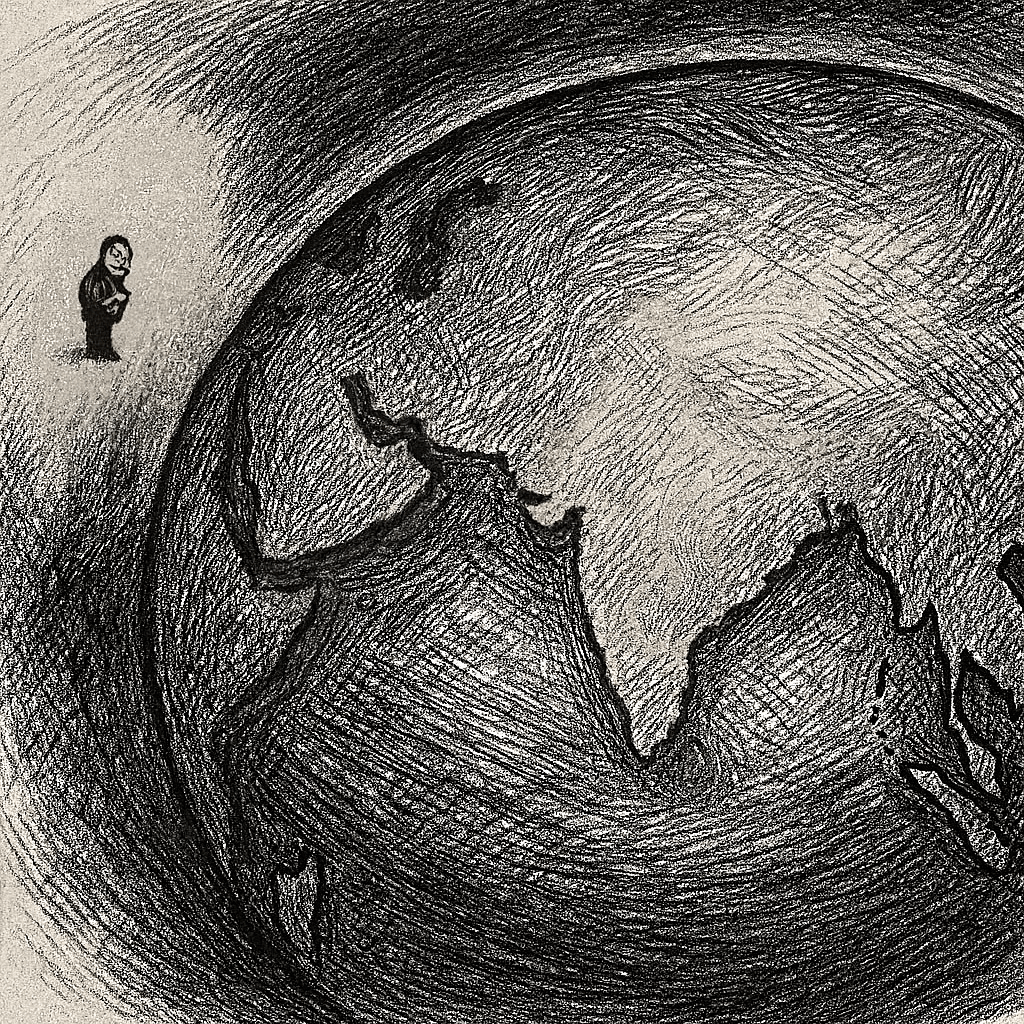
On this day, we are also sadly reminded on how a day earlier, a new nation was carved out of India. We know that it was Jinnah, who in his pursuits, was responsible for the deaths of hundreds of thousands of people and the uprooting of millions more from their homes. The wounds of the tragedy are still to heal.
Most of us however may not know that the word “PAKSTAN” was first used by Chaudhary Rehmat Ali more than a decade before partition took place. Born in Balachur, Punjab, he went off to England to study law. It is at Cambridge in 1933, he, along with a few others took out a pamphlet titled “Now or Never Are we to live or perish for ever”.
The pamphlet was published just after the third Round Table Conference had concluded and had failed to make any headway on the question of the future of India. Rehmat Ali sought to influence British and Muslim opinion in his roughly two-thousand-word piece spread over eight pages.
The pamphlet used contradictory logic and is reflective of flawed concept of a separate nation state which is harped time and time again by our neighbour’s leaders even today.
Rehmat Ali stated to be speaking on behalf of thirty million Muslims of five Northern Units of India-Punjab, N.W.F.P. (Afghan Province), Kashmir, Sindh and BaluchisTAN and thus the acronym PAKSTAN. This was a fantastical premise, as he was neither a politician nor a mass movement leader. He did not represent any region, class or group from the subcontinent.
He tried to elevate regionalism to the pedestal of nationalism. It is mostly agreed that the modern concept of nationalism is a “social contract” between the rulers and the governed. No such “contract” existed in these five units which he names. He falsely claimed that thirty million Muslims of these areas were bound by common history, culture economics and tradition. Nothing could be more far from the truth. An Afghani would be as different from a Punjabi as Spanish from an Italian. He did not mention ‘language’ as a binding factor as he was aware of the many languages spoken in those areas. However, he stated that Urdu was the ‘lingua franca’ of the subcontinent. This dangerous contention would rear its head in 1971 ironically leading to another partition and contradiction of the two-nation theory. He claimed to be speaking for these thirty million Muslims while forgetting that fifty million more Muslims lived in the rest of the subcontinent
Rehmat Ali whipped up the bogey of minority versus majority claiming that Muslims would be one in four in a united India and thus needed a separate homeland. However, he was silent on the ten million non-Muslims who would also be one in four in his so called “nation of forty million” Data was selectively analyzed to convolute logic.
He spoke of fourteen hundred years of contribution to India as a justification for a separate homeland. Again, he forgot that historically recorded contributions to the concept of India or Bharat go back to seven thousand years and more. Our proud Indus Valley Civilization in fact springs up the region he claimed as his religious homeland.
Excluding Russia, he compared Europe to the subcontinent with the same size and population claiming that twenty-six nation states prospered together having the same religion, civilization and economic system. This was a fallacious comparison. European nations had been for centuries been at war with one another despite a common religion. In fact, had religion united, the political geography of the world map would be very different today. Further, Europe prospered only when they integrated into a common market and eventually a common currency. In unity lies strength.
In essence, Rehmat Ali dished out a self-defeating contradictory pamphlet. While the name may have stuck as fantasies do, it had no takers as a concept. Jinnah himself apparently called it a “Walt Disney dreamland”. Pakistan did happen later but further imploded twenty-five years later due to the inherent contractions of the idea of partition.
Rehmat Ali, came back to Pakistan after it was founded and was dissatisfied with its form. He apparently referred to Jinnah as “Quisling-e-Azam” and was soon expelled from the country with his assets confiscated. He went back to England broken and penniless and died a few years later – his funeral expenses were born by a college in Cambridge.
History reminds us that ideas born in pamphlets can redraw maps, but when they rest on flawed logic, they also sow seeds of future implosion. A fantasy that remains a pipedream.


 Curiously
Leave a comment