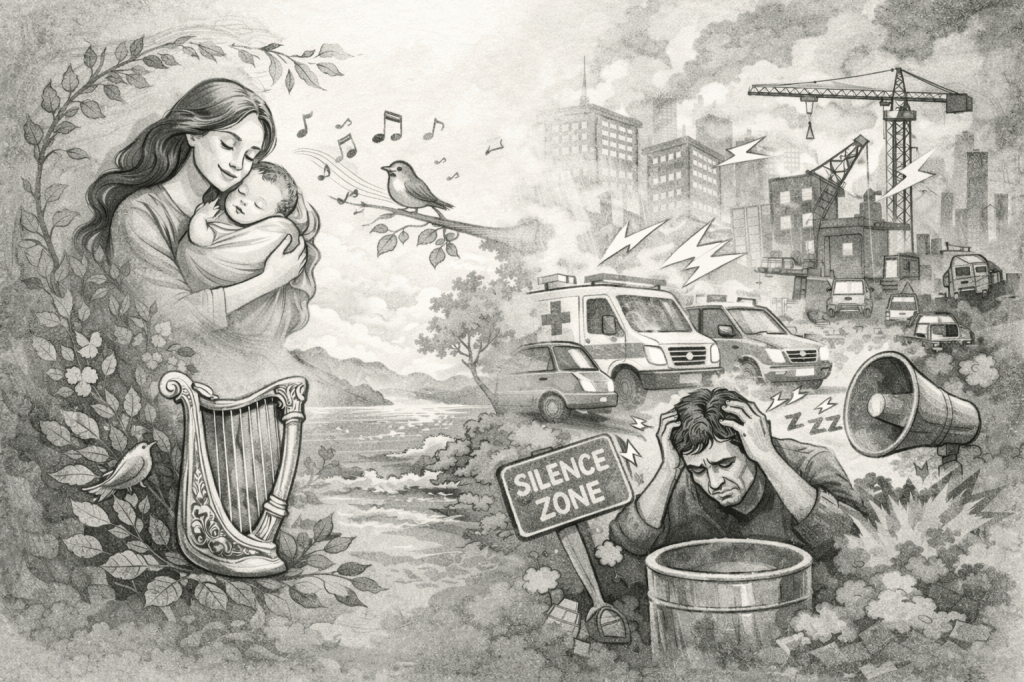
A mother hears a baby cry when it enters the world — perhaps the most beautiful notes to her ears. We are surrounded by beautiful sounds: the purr of a pet cat, a baby’s coo, a nightingale’s song, waves crashing against rocks; regaling the symphonies of Beethoven to the taals of Tansen.
Yet it takes very little to descend into a pall of noise. The Cambridge Dictionary defines noise as sound that is unwanted, unpleasant, or loud. In other words, sound becomes noise when it stops delighting and starts disturbing.
Modern life generates noise in abundance. Unplanned urban growth has blurred the boundaries between residential and commercial spaces. We wake to the honking of school traffic; as the day unfolds, the din intensifies — office commuters, construction machines, and blaring loudspeakers layering one disturbance over another.
What does this do to us?
The World Health Organization identifies noise as the second-largest environmental cause of health problems after air pollution. Excessive noise disrupts sleep, affects cardiovascular health, reduces productivity, and impairs children’s learning and development — sometimes with lifelong consequences.
Government rules on permissible noise levels are clear and have been upheld by the Honourable Supreme Court. Silence zones (defined as 100 square meters around hospitals, schools, courts, and religious institutions) are meant to be protected spaces where honking and loudspeakers are prohibited. Permissible day time levels permit a maximum of 75 dB(A).
Yet rules alone cannot create quiet; only responsible citizens can. Like air pollution, noise is a public burden. Even those who do not create it are forced to suffer it. Ironically schools where children come to learn, play and grow themselves mock the silence zones themselves.
May we, as responsible citizens, make conscious efforts to reduce noise — honking less, respecting silence zones, and avoiding loudspeakers where they do not belong. Especially near hospitals and schools. May we aspire to wake to birdsong rather than blaring horns, to the rustle of leaves rather than the roar of machines.
Plato said, “An empty vessel makes the loudest sound.” Let us not be empty vessels. Let us aspire instead to be golden harps — producing soft melodies that are music to everyone’s ears.
Only then can we protect both our present peace and our children’s tomorrow.
On our 79th Independence Day, we once again got a chance to celebrate our hard-won freedom and all that we have consolidated as a celebrated democracy. We have stood resolute in our principles and are heading towards becoming one of the largest economies in the world
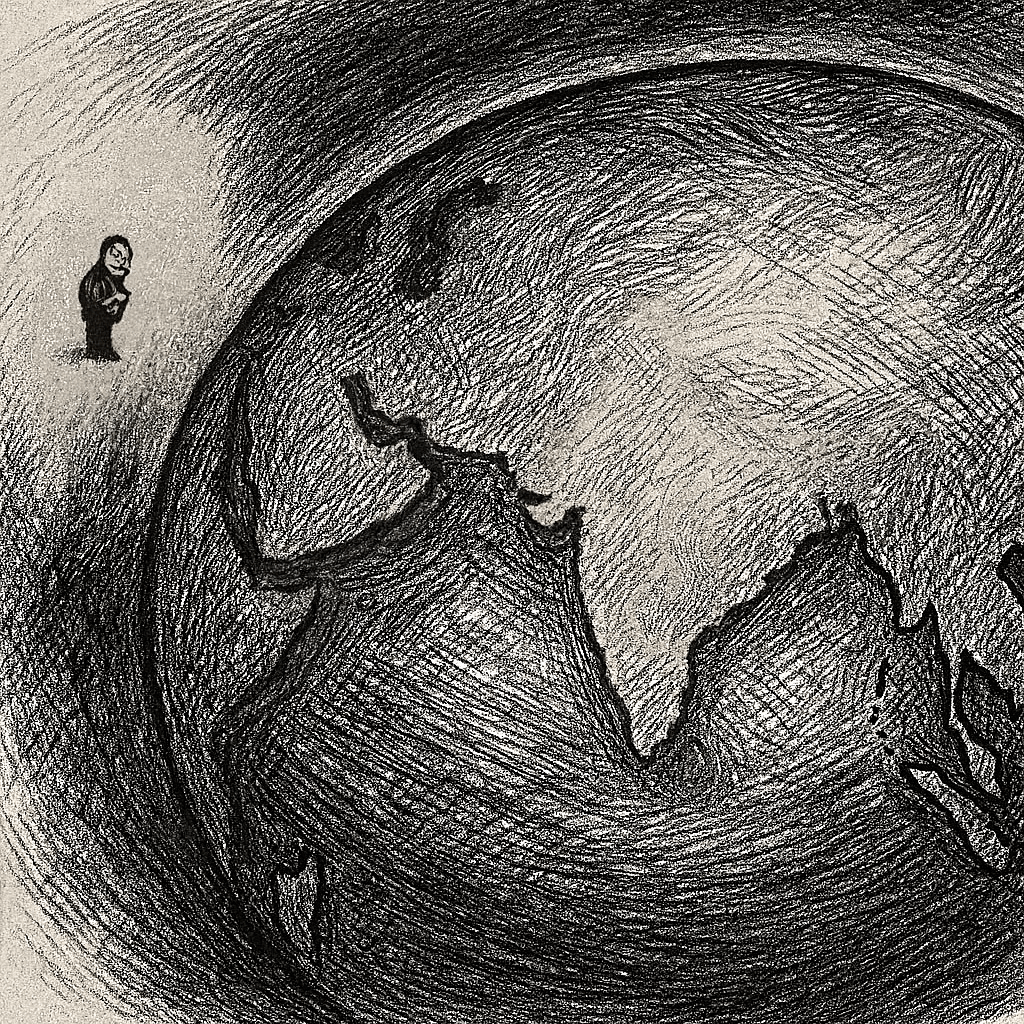
On this day, we are also sadly reminded on how a day earlier, a new nation was carved out of India. We know that it was Jinnah, who in his pursuits, was responsible for the deaths of hundreds of thousands of people and the uprooting of millions more from their homes. The wounds of the tragedy are still to heal.
Most of us however may not know that the word “PAKSTAN” was first used by Chaudhary Rehmat Ali more than a decade before partition took place. Born in Balachur, Punjab, he went off to England to study law. It is at Cambridge in 1933, he, along with a few others took out a pamphlet titled “Now or Never Are we to live or perish for ever”.
The pamphlet was published just after the third Round Table Conference had concluded and had failed to make any headway on the question of the future of India. Rehmat Ali sought to influence British and Muslim opinion in his roughly two-thousand-word piece spread over eight pages.
The pamphlet used contradictory logic and is reflective of flawed concept of a separate nation state which is harped time and time again by our neighbour’s leaders even today.
Rehmat Ali stated to be speaking on behalf of thirty million Muslims of five Northern Units of India-Punjab, N.W.F.P. (Afghan Province), Kashmir, Sindh and BaluchisTAN and thus the acronym PAKSTAN. This was a fantastical premise, as he was neither a politician nor a mass movement leader. He did not represent any region, class or group from the subcontinent.
He tried to elevate regionalism to the pedestal of nationalism. It is mostly agreed that the modern concept of nationalism is a “social contract” between the rulers and the governed. No such “contract” existed in these five units which he names. He falsely claimed that thirty million Muslims of these areas were bound by common history, culture economics and tradition. Nothing could be more far from the truth. An Afghani would be as different from a Punjabi as Spanish from an Italian. He did not mention ‘language’ as a binding factor as he was aware of the many languages spoken in those areas. However, he stated that Urdu was the ‘lingua franca’ of the subcontinent. This dangerous contention would rear its head in 1971 ironically leading to another partition and contradiction of the two-nation theory. He claimed to be speaking for these thirty million Muslims while forgetting that fifty million more Muslims lived in the rest of the subcontinent
Rehmat Ali whipped up the bogey of minority versus majority claiming that Muslims would be one in four in a united India and thus needed a separate homeland. However, he was silent on the ten million non-Muslims who would also be one in four in his so called “nation of forty million” Data was selectively analyzed to convolute logic.
He spoke of fourteen hundred years of contribution to India as a justification for a separate homeland. Again, he forgot that historically recorded contributions to the concept of India or Bharat go back to seven thousand years and more. Our proud Indus Valley Civilization in fact springs up the region he claimed as his religious homeland.
Excluding Russia, he compared Europe to the subcontinent with the same size and population claiming that twenty-six nation states prospered together having the same religion, civilization and economic system. This was a fallacious comparison. European nations had been for centuries been at war with one another despite a common religion. In fact, had religion united, the political geography of the world map would be very different today. Further, Europe prospered only when they integrated into a common market and eventually a common currency. In unity lies strength.
In essence, Rehmat Ali dished out a self-defeating contradictory pamphlet. While the name may have stuck as fantasies do, it had no takers as a concept. Jinnah himself apparently called it a “Walt Disney dreamland”. Pakistan did happen later but further imploded twenty-five years later due to the inherent contractions of the idea of partition.
Rehmat Ali, came back to Pakistan after it was founded and was dissatisfied with its form. He apparently referred to Jinnah as “Quisling-e-Azam” and was soon expelled from the country with his assets confiscated. He went back to England broken and penniless and died a few years later – his funeral expenses were born by a college in Cambridge.
History reminds us that ideas born in pamphlets can redraw maps, but when they rest on flawed logic, they also sow seeds of future implosion. A fantasy that remains a pipedream.
Bindusara, Bindusara, the son of a great king, Bindusara, Bindusara, the father of a greater king; Bindusara, Bindusara, a ruler of glory and might, Bindusara, Bindusara, preserver in his own right.
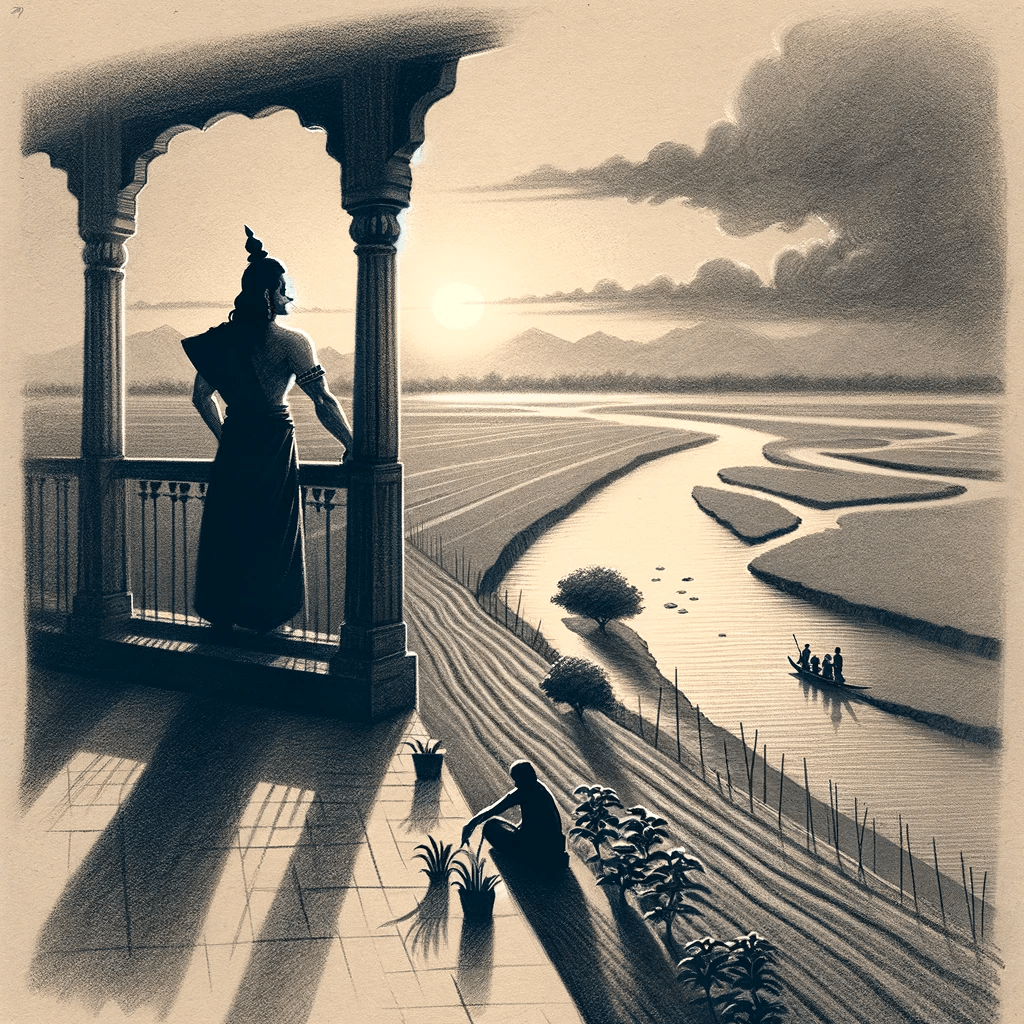
From his palace at Patliputra, Bindusara gazed at the yore. The vast river Ganga flowed at a sluggish pace. It was the lean season, so the channels were narrow, interspaced with vast sand formations. Farmers were planting vegetables taking advantage of the fertile soil. They would then sell the produce, providing nourishment to his subjects and contributing to the growth of his glorious empire.
The summers would soon peak and then it would be time for torrential downpours. This would be followed by winter and another new cycle of seasons. He would grow one year older- adding another year of glory and fame. Yet, as the sun dipped below the horizon, Bindusara felt the weight of his inheritance.
Glory and Fame ! Bindusara inherited a vast empire from his father Chandra Gupta Maurya who was the founder of the Mauryan Dynasty. Chandra Gupta Maurya had overthrown the powerful Nandas to establish his kingdom at Pataliputra. He went on to defeat Seleucus, the Greek viceroy of Alexander, and his empire soon stretched from Bengal in the east to the Hindu Kush in the north west. He was supported by Chanakya, his advisor, mentor and friend, whose statecraft ensured rule of law, diplomacy and an efficient administration. The Kingdom was prosperous and the people happy. Even in death, Chandra Gupta attained glory. Following Bradabahu, the great Jain ascetic, he converted to Jainism, went south, attaining immortality by fasting to death.
Bindusara knew that his father had worked hard to earn his stature. With no lineage like Ajatshatru or Dhana Nanda, Chandra Gupta had risen from an impoverished family, and armed with bravery, skill and intelligence, had worked his way right to the very top. Chandra Gupta Maurya was a Creator and gave his son, Bindusara, a vast empire as an inheritance to govern.
His father had etched his name into the hall of immortality, taking risks, doing things not done before and even seeking death in a most noble way. In contrast, Bindusara’s had none of those exciting chapters. Was it necessary to take the unbeaten path to enter the hallowed portals of fame? Or could he also be praised for the paths not taken, the risks not endured.
His reign had been steady and quiet, but whispers of discontent began to reach his ears. A young rebel leader, claiming descent from the Nandas, had ignited a rebellion in the west. His court urged swift and ruthless action, as his great father would have done.
Fellow kings jeered at him. They whispered around that he was nothing like his father who built the vast empire from scratch. He suspected that many of his ministers felt the same. That was one of the reasons why he relieved the old Chanakya from his responsibilities and asked him to proceed on pilgrimage. He always suspected that Chanakya did not have the same respect for him as he had for his father.
Bindusara felt guilty. Obviously he had none of the achievements of his father to gloat and no exciting stories to tell. In the streets of Patliputra, where he often went out in disguise, he heard his father’s exploits, which were now folklore. In contrast, he scarcely heard praises about himself. Once he overheard his subjects’ yearning for a ruler with the vigour and valour of his father. “Our King does not forge his own path,” one said, “he walks the road laid before him. “This is what happens when one is born in luxury, there is no zeal, no drive, no ambition,” muttered the other in agreement.
And this was the problem. Or was it? No prince would have had it better. Bindusara did not have to fight poverty, forge alliances, make promises and go for conquests to establish an empire. This was all done by his father, who went through this exhausting grind. He was born with a silver spoon in his mouth – quite literally – did he not have lick honey from one, in his “Annaprasan” ceremony.
His father was larger than life who rose like a phoenix from the ashes to accomplish great things. In contrast, he was already on a golden pedestal with rivers of aplenty flowing around. Was it his fault that he was born in royalty? Was it his fault that he had no rags to riches story to enthuse the rabble? He had the best of education, learnt how to fight and engaged in deep conversations with the wise men of his court. His administration was firm and efficient and its borders were secure. His people were happy or so he thought. And yet this rebellion?
How he wished for wise and sane counsel. The courtiers around would fawn over him, each currying for a favour – each having their own personal axes to grind. They were all “Yes men” who were like opium – giving instant gratification while befuddling his brain. He asked his friend, the Macedon king Antiochus-I for sweet wine, dried figs and a sophist. He got the excellent wine and figs but a sophist was not sent – apparently forbidden under Greek law.
He was “Bindusara” which meant “strength of a drop”, referring to the drop of poison which touched his head when he was born. He not only survived but also flourished. The Greeks called him Amitrochates – derived from his Sanskrit name “Amitraghata”, slayer of enemies. Was he expected to live and die by these epithets ? Should he not gather his army, crush the rebellion? He could do one better than his father and conquer the unconquered lands. The south lay out of his grasp as did the troublesome Kalinga due east. Should he add these to his great kingdom and etch his name alongside his father?
Or he could be the “Preserver”. Lord Vishnu and his ten avatars were as much revered as the “Creator” Lord Brahma and the “Destroyer” Lord Shiva. He could preserve what had been bestowed upon him and pass on the legacy to his heirs.
Tormented by the words on the street, the whispers in the court, the internal tumult, and driven by a desire to prove his worth, Bindusara resolved to face the rebellion with understanding. He embarked on a secretive journey to the rebellious region, dressed as a common traveller.
Along the way, Bindusara saw the plight of his people: the harsh taxes and the brutal enforcement of laws that spurred the rebellion. In a dusty tavern, he met with the rebel, a charismatic young man whose grievances echoed those of his followers. They spoke at length and spent considerable time together.
Amongst other things, some of his words struck deep. “Your subjects toil hard from morning to night for two square meals a day, ” the rebel said. “They marry and have children who carry on the same drudgery that would be repeated generation after generation. Leadership, conquests and glory are as foreign to them as the Greeks to India. Their expectations of their king are limited to remain secure and earn their living peacefully. But the wars, the taxes which they entail, the loss of life and crops, not to mention the harsh punishments, all add to their misery”. For the first time, Bindusara viewed his empire through the eyes of those it had failed.
Returning to Patliputra, Bindusara called his advisors together. “We will not crush this rebellion with force,” he declared. “We will address the root of this discontent. We will ensure fair treatment for all. We need not innovate or enforce with impunity but improve the efficiency of our administration.”
His decision shocked the court but marked the beginning of a new approach. The gentle reforms had its desired effect. Nothing spectacular. Just better implementation with an ear to the ground. The rebellion dissolved as quickly as it had formed. The kingdom was peaceful once again. He liked the term which was now associated with his rule – “enlightened despotism”.
Bindusara further proclaimed that he would not embark on any new major conquests. His father had spent much of his life conquering and building his great empire. This left him with little time for his family. He did not understand what further purpose he would gain by mounting the horse of ambition and chasing unattained glory. Bindusara resolved to devote time to his family. His family of subjects and his family at home. His success would be in balancing both…..
Years later, Bindusara walked the same palace balconies. The kingdom was stable and peace prevailed. There were occasional revolts which had to be put down with force, but only as a last option. Generally, gentle counsel prevailed. Bindusara pondered again. Would he be remembered in the annals of history and in what manner? As the son of his father, or as the father of his son? Or would he be remembered as Bindusara, the king who not only preserved what was bestowed upon him but flourished. He was no longer just the heir to Chandra Gupta’s empire; he was Bindusara, the ruler who bridged the old with the new. He hoped to pass down not just an empire, but a legacy of compassion and wisdom.
Epilogue
Bindusara rule spanned more than two decades. Apart from his father great Chandra Gupta Maurya and his illustrious son – Ashoka the Great, no other Mauryan king reigned for as long as he did, nor are the others remembered as were these three spectacular kings. While Chandra Gupta Maurya conquered and Ashoka the Great spread “Dhamma”, it was Bindusara who was the bridge between the two, who preserved and nourished the stage, given to him, enabling his son to attain world fame. And that is how he is remembered, for being Bindusara !
 drneiljain.blog