Category: Uncategorized
-
Wedding Chimes and Dancing Hooves
“🎵Aaj mere yaar ki shaadi hai, aaj mere yaar ki shaadi hai” (Today is my friend’s wedding, today is my friend’s wedding)🎵” – timeless classic wedding song from a hindi movie of the 70s.
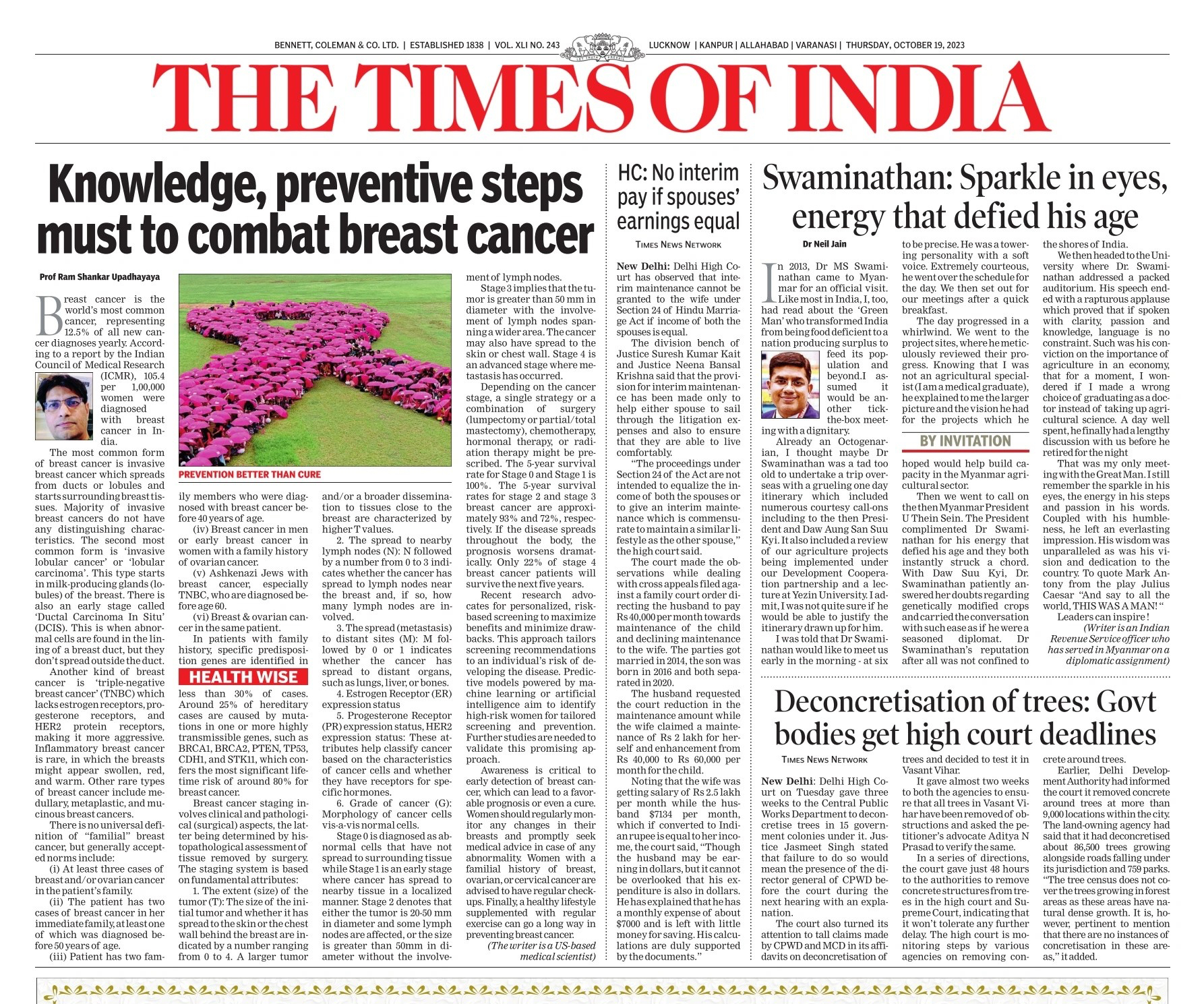
She was majestic, with a pure white coat that shone like a snow-capped mountain in the sun. Her long black hair contrasted with her pale skin. Her chestnut eyes sparkled with intelligence and kindness. She had a refined head, with a straight profile. She had a strong neck, a deep chest, and complementing curves ending with long slender legs. She felt the groom’s excitement and nervousness. She sensed his gratitude, as he stroked her neck and whispered in her ear. “ Poor chap, perhaps this is his first time,” Rani thought with a hint of mischievousness.
Rani was more than a mare; she was a symbol of honour and virility. She was the queen of the Baarat (wedding procession).
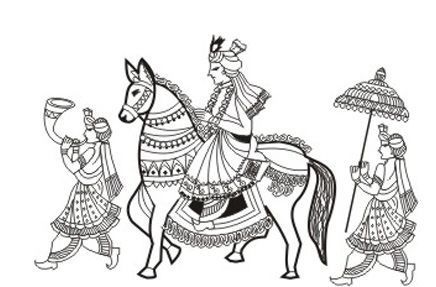
As the groom mounted her, Rani’s black tail swished about, like the peacock feathered Pankhaa (fans) of the great emperors. She had a pink muzzle and striped hooves. Her white fetlocks bore the weight of the colourful saddlecloth, embroidered with gold and silver threads, and a matching bridle, adorned with bells and tassels.The groom held the reins and waved to the crowd. It was his day and there was an elaborate ceremony as he got onto Rani. The musicians had lined up and had started playing popular musical numbers. The cymbals clanged and the trumpets blared. The music alternated between noise, but who really cared?
Rani’s ears twitched in the din of the crowd. She saw pretty ladies in their new dresses and handsome men in their suits, surrounding the groom. She smelled the alcohol that was discreetly passed around. She remembered the old days, when weddings were simpler and happier. When there was live music and dancing, not loudspeakers and showbiz. When there was respect for tradition and nature, not frivolity and extravagance. She knew the world was changing, and not for the better. She heard the word “pollution” in many conversations, but she wondered if anyone cared about the noise that hurt her ears. She felt the pressure of the event managers and the clients, who wanted to make the most of their money and time. They made the processions longer and fancier, but also more boring and meaningless. They replaced the rituals with entertainment, but also lost the essence of the culture. They wanted to be the best and the brightest, but also the loudest and the most wasteful. Rani was a wise mare, and she pitied them.
Rani’s life had been dull and routine in the “Mastaan Band.” She led a lonely life as she was the only horse around and had no one to talk to. She missed her parents, who had been her companions and fussed over her. The old master had treated them well, feeding and letting them rest in the green fields. However, they grew old and could not go to the weddings. One night, he took them away. She overheard the musicians saying that he had set them free, as they were too old and weak to work. But some doubted this, and whispered that he had sold them to the leather factories. She never knew the truth, and she never saw them again
How she envied Black Beauty, the celebrated horse who, in comparison, lived in a faraway land and epitomised freedom, adventure and love. Black Beauty, a gentle and kind horse, was born on a farm and enjoyed a comfortable life with a squire. Later he was sold to various owners, some good and some cruel and suffered from overwork, mistreatment, and accidents. He finally found a happy home and found fulfilment and contentment.
Her attention was drawn back to the present. Someone had started lighting firecrackers. “Swishh, boom, crackle,” there were Anaars (flowerpots), sparkles and dreadful bombs. As they were lightened up, each sent a shudder down her spine. Someone from behind joked of tying a string of crackers to her tail – thankfully, nobody took it seriously. She wondered at the foolhardy humans at their naivety. These could set up a fire or worse still injure or maim the guests who were dancing with gay abandon. The smoke could induce asthma which she heard was reaching epidemic proportions.. She discounted the damage being done to her lungs and nerves – afterall she was dispensable, just a means to the end.
Rani understood the significance of weddings for families. These were reunions for relatives and friends, often funded by years of savings. These were opportunities for business families to impress their stakeholders. These were also events where celebrities were hired for entertainment and status. Weddings were grand and sacred, with carefully planned rituals and delicious food. They also supported a whole industry of goods and services, from tents and decorations, travel and hospitality, to sweets and gifts. They created jobs and boosted the economy. That’s why the wealthy were urged to avoid foreign weddings and keep the money and employment at home. However for Rani, it was simple. It was a matter of survival. The hardship ensured that she had her meal and her place in the band. For her GDP was Grinding Daily Perseverance.
Could she bolt one night and run away ? But where would she run to and more importantly to whom ? As far she knew, there were no green meadows around where she could lead a happy and carefree life, munching grass and basking in the sun. She would be caught by her master, and if not by him, then by another who would either sell her off to another band or the tanners. And most importantly, could she run away ? Her master did not keep her out of sight and if at all he would let her loose, he would ensure that a hind and fore leg were tied diagonally so that she could not even canter, let alone gallop away. She thought her condition was similar to Boxer, the loyal and hardworking horse in “Animal Farm”, another celebrated book, who was eventually sent to the “knacker’s yard,” after he became useless. The book, which was a political allegory about revolution and power, was one of her favourites. She had no voice or choice in her fate. She was to be loyal and obedient even if she was miserable. She was a victim of the system and had no hope for a better future.
It had been an hour and they still were some distance from the destination. There were a few curious foreigners who had joined the festivities. Some were clicking pictures, others were shaking a leg along with the main family. One or two came up to her and sympathetically clicked their tongues. Would they do something ? Maybe not – after all they had come to witness and enjoy the “grand Indian wedding” rather than get into the philosophy of exploitation and animal rights. After all, how much better did they treat their own horses – using them for sport, leisure and gambling.
A food cart trudged along behind her. Guests danced and helped themselves to the delicious refreshments. Rani paid no attention to the Paneer tikkas and French fries being served. Her longing was for a bale of hay and a cask of fresh, clean water. She had heard tales of horses savouring delectable lumps of sugar and juicy carrots. But Rani had never tasted such delicacies. In fact she could not remember the last time she had a full meal. Without proper exercise, a full meal would mean more weight – who would like to ride on a fat horse on their wedding ! So half starved, Rani could only allow herself the luxury of what might have been !
Half-starved, she had been many times. This was much better than being kicked and beaten. As a foal, she had been “trained” to withstand loud noises, bright flashes of light, and heavy loads. She quivered, remembering those training sessions. Made to stand her ground, firecrackers would be set off near her. She would see the fire, hear the loud noise, and smell the acrid smoke thereafter. Sometimes a spark or two would nonchalantly brush against her, stinging her hide. Her senses eventually dulled to endure the deadliest of rockets and bombs. Then came the loud volume songs—music that otherwise would have been balm to the soul—blared from loudspeakers, giving her splitting headaches. The “light and sound” shows soon tamed her into submission. An abject surrender to her master. Sometimes her master’s neighbours would mildly protest. To this, he would say, “ghoda ghas se dosti kar lega, to khaega kya”— if the horse befriends the grass—what will it eat? How grotesquely ironic, she pondered.
Rani sensed the destination drawing near. The music intensified, and the dance moves quickened. Uncles and aunties, once on the sidelines, now joined in, gyrating to the beats. Younger ones pirouetted on pencil heels to popular movie songs. In another time, another place, Rani might have lifted a hoof or two.
Once, she happened to glimpse her master’s smartphone which was ubiquitous these days – as common as tea stalls on every street corner. Onscreen horses pranced in a distant central Asian country, galloping across grasslands, manes swaying in the wind. A herd, perhaps their family, roamed together—munching, drinking from crystal-clear streams. Rani watched in fascination. Until then she did not know that horses could be free, except in stories. These were called wild horses. But Rani wondered: “who was really wild – these beautiful horses living their freedom or the ones who called them so?”
The procession was almost at the bride’s place. There would be rituals, merriment, food and photography the entire night. Vows would be taken around the sacred fire – the symbol of purity and the powerful medium to communicate to the Gods in heaven. These were powerful traditions dating back to the holy Vedas and held sacrosanct ever since. She knew that the country was proud of its culture and history and horses played a significant part down memory lane. Lord Krishna’s chariot was drawn by horses in the Mahabharata while the Ashwamedha yagya with horses was how kings expanded their territories, power and prestige. Towns and memorials had been built in memory of powerful loyal horses. Alexander from Macedonia, after restoring King Porus to his throne, founded a city in memory of his beloved horse which died in battle. Chetak entered folklore after giving up his life while saving Rana Pratap after the battle of Haldighati. A memorial commemorates his extraordinary feat. Chetak also became a household name for the motorised two wheeler which along with cars, ironically, replaced horses as a medium of transport and relegated them to the fringes of the economy.
Rani sometimes met horses at the wholesalers market -dragging twice the loads that they usually would. Their condition was much worse than hers. She was weighed down by only a groom and the ornamented saddle while they were beasts of burden along with donkeys and mules.
They reached their destination. One final round of dance and music ensued, reaching a feverish pitch with ear-splitting trumpets and drums. Bank notes were thrown in the air, a powerful omen to ward off evil spirits. Greedily gathered by the members of “Mastaan Band,” the money would fund another night of sozzled merriment once they got back to base. The groom, grinning from ear to ear, was carefully dismounted. The dancing resumed – presumably all the way to the altar. A night to remember for years to come through silver, ruby, gold and diamond anniversaries. Rani, doing a double shift tonight was led away to another venue. She cast one last glance at the festivities. With a heavy heart, she resigned herself to another night of serving as a mere spectacle in someone else’s celebration.
As she steeled herself to an encore, she remembered another popular hindi movie song “ 🎵Raja ki aayegi baraat, rangili hogi raat, magan mein nachungi – (The groom’s wedding procession will come, it will be a colourful night, I will dance in joy !🎵”
-
Dr. M.S. Swaminathan – An obituary
Can leaders inspire ?
In 2013, Late Dr. MS Swaminathan came to Myanmar for an official visit. Like most in India, I too had read about the “Green Man ” who transformed India from being food deficient to a nation producing surplus to feed its population and beyond. I assumed it would be another tick-the-box meeting with a dignitary.Already an Octogenarian, I thought maybe Dr. Swaminathan was a tad too old to undertake a trip overseas with a grueling one day itinerary which included numerous courtesy call ons including to the then President and Daw Aung San Suu Kyi. It also included a review of our agriculture projects being implemented under our Development Cooperation partnership and a lecture at Yezin University. I admit, I was not quite sure if he would be able to justify the itinerary drawn up for him.
I was told that Dr. Swaminathan would like to meet us early in the morning – at six to be precise. He was a towering personality with a soft voice. Extremely courteous, he went over the schedule for the day. We then set out for our meetings after a quick breakfast.
The day progressed in a whirlwind. We went to the project sites, where he meticulously reviewed their progress. Knowing that I was not an agricultural specialist (I am a medical graduate), he explained to me the larger picture and the vision he had for the projects which he hoped would help to build capacity in the Myanmar agricultural sector.
Then we went to call on the then Myanmar President U Thein Sein. The President complimented Dr Swaminathan for his energy disproportionate to his age and they both instantly struck a chord. With Daw Suu Kyi, Dr. Swaminathan patiently answered her doubts regarding genetically modified crops and carried the conversation with such ease as if he were a seasoned diplomat. Dr. Swaminathan’s reputation after all was not confined to the shores of India.
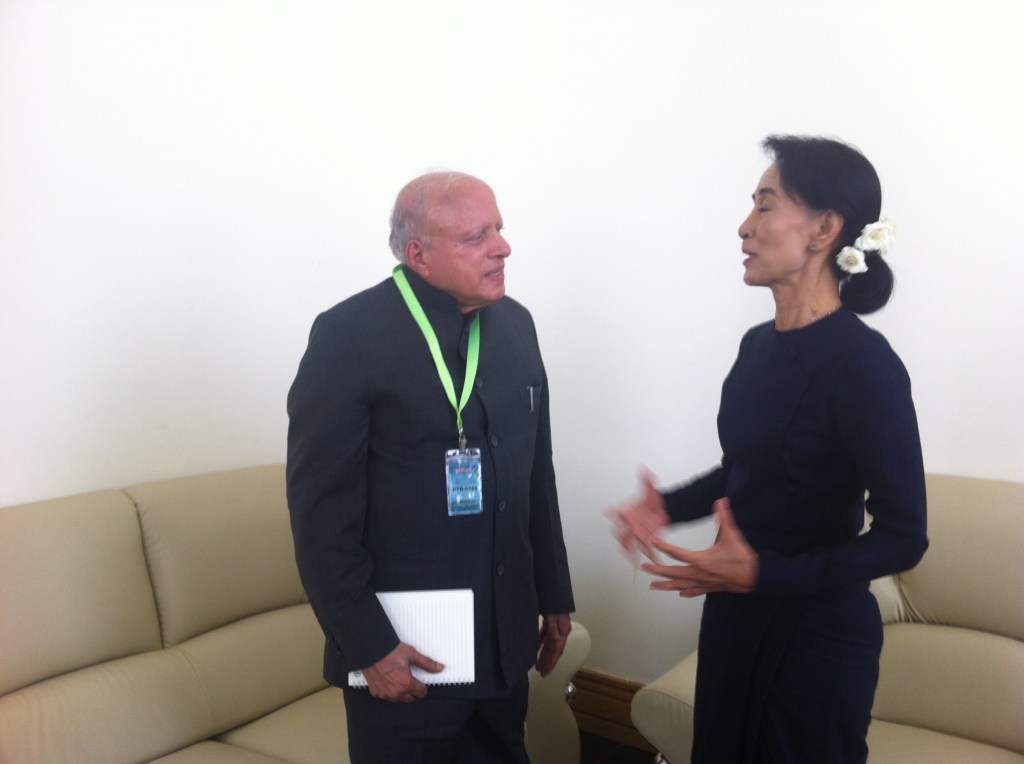
Shri M.S Swaminathan and Daw Aung San Suu Kyi at Nay Pyi Taw , February 2013 © We then headed to the University where Dr. Swaminathan addressed a packed auditorium. His speech ended with a rapturous applause which proved that if spoken with clarity, passion and knowledge, language is no constraint. Such was his conviction on the importance of agriculture in an economy, that for a moment, I wondered if I made a wrong choice of graduating as a doctor instead of taking up agricultural science. A day well spent, he finally had a lengthy discussion with us before he retired for the night
That was my only meeting with the Great Man or rather G.O.A.T (Greatest Of All Time) in today’s parlance. I still remember the sparkle in his eyes, the energy in his steps and passion in his words. Coupled with his humbleness, he left an everlasting impression. His wisdom was unparalleled as was his vision and dedication to the country. To quote Mark Antony from the play Julius Caesar “And say to all the world, THIS WAS A MAN!”
Leaders can inspire !(An edited version was published in the Times of India, Lucknow edition, 19th October 2023)
-

Pass the Salt please…
Published in the Times of India Lucknow Edition (May 22, 2022)
The popular television series “Versailles”, which is streaming on Netflix, deals with the life of the Sun King Louis XIV and the intrigue of court politics during his reign. An interesting side subject which is touched upon, is the imposition of salt tax known as gabelle in French. The king increased the salt tax to account for the shortfall in revenue. Colbert, the finance minister, remonstrated, reminding the King that it was the tenth increase in so many years. Protests later erupt and eventually a revolution costs the later Louis XVI his crown and his life.
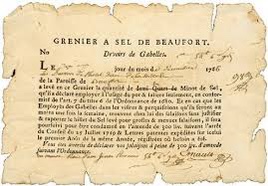
Gabelle – salt tax Salt is a curious commodity, ubiquitous and yet ever so precious. A simple compound made up of two elements Sodium and Chlorine in equal measure, it is a sine qua non for humans and has been used as a preservative since times immemorial. It dissolves in water easily, leaving no trace and while having the ability to corrode and destroy infinitely stronger compounds like metals. Both deficiency and excess consumption lead to life threatening conditions and along with sugar, its regulation is a subject of dinner conversations, medical conferences and food safety regulation standards.
While spices for flavour and preservation spurred Europeans to navigate oceans and “discover” new lands, the humble salt was also used to control trade and outcomes of wars. Often kingdoms such as in medieval Poland and cities across Europe rose and fell depending on the availability and ability to mine and sell salt. It was often a war strategy used to starve the enemy by denying access to salt and thus causing their food supplies to turn stale and foul.
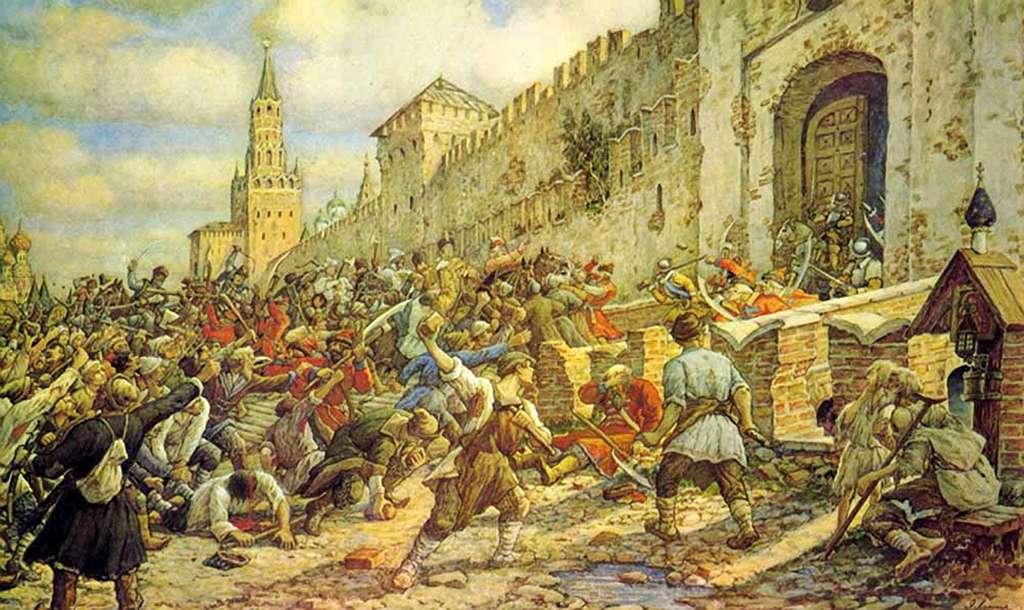
Salt riots in 1648 Tax on salt has enriched and unsettled rulers. Russia had it and so did France as mentioned above. In India, the tax treatise Arthashastra written by Chanakya mentions a special officer designated to collect tax on salt. The Mughals also imposed salt tax in Bengal where it was mainly produced. Following the battle of Plassey, the British used to derive revenue from the land producing salt and also imposed duties on its transit. After the battle of Buxar, production and sale of salt was made the monopoly of the East India Company (apart from tobacco and betel nuts). At one point, salt contributed to around ten percent of the total revenue collected by the British ! Tax on salt was hated and much before the famous Dandi March by Gandhi ji, nationalists had advocated modifications and repeal of the salt tax. The first session of the Indian National Congress had it in their agenda, while Dadabhai Naroji gave an impassioned speech in the House of Commons against it. Gandhiji electrified the country with his famous March and was a contributing factor to eventual Independence. It was abolished, paradoxically, by Liaquat Ali Khan, the Finance Minister of the interim Government in 1946 (and later on Prime Minister of Pakistan). Curiously salt tax remained a cess (tax for a specific purpose) from 1953 for maintaining the salt production and distribution infrastructure until it was finally abolished in 2016.
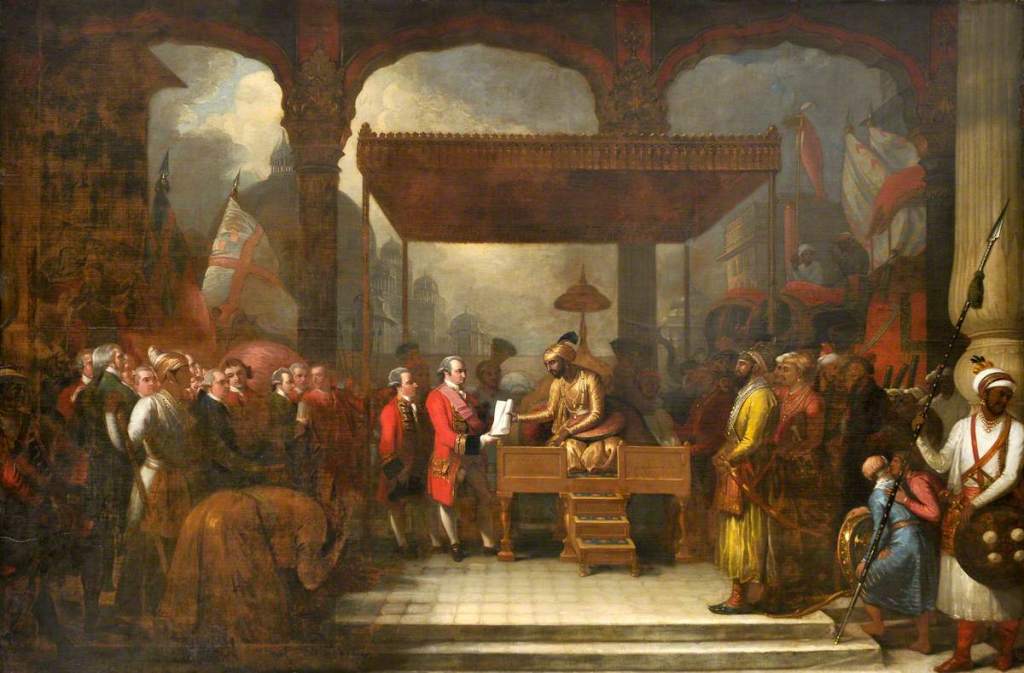
West, Benjamin; Shah ‘Alam, Mughal Emperor (1759-1806), Conveying the Grant of the Diwani to Lord Clive, August 1765; British Library; http://www.artuk.org/artworks/shah-alam-mughal-emperor-17591806-conveying-the-grant-of-the-diwani-to-lord-clive-august-1765-191206 Why the fascination to monopolise and tax salt? Being a universal and indispensable ingredient, tax on salt ensured uniformity, uniformity and certainty in collection of revenue. Further it is a consumption tax wherein the tax is on consumption and included in the cost of the good. This is called sales tax, value added tax, goods and services tax etc. depending upon which country you reside in and the modality of levy. Indirect taxes have the benefit of inclusion within the price of a good or service and thus does not affect the individual directly. That’s why governments find it convenient to rely on indirect taxes as a source of revenue. The recent record monthly GST collections in India have shown the government’s intent to reap the benefits of GST reforms, better compliance and good enforcement by the officers administering Indirect taxes. However increased collections, while reflecting increased consumer demand and economic revival, also indicates rising inflation which is validated by wholesale and retail inflation statistics. Thus, indirect taxes adversely affect the consumer due to its inflationary pressure on price of goods and services. Further, indirect taxes are regressive, which means that they hurt the lower end of society much more than the upper echelons. Salt is a classic case, consumed by everyone in more or less the same quantities, but any tax on it will pinch the pocket of a less earning household more than anyone else. No wonder, revolutions have occurred on the issue of humble salt and increased taxes affecting the poor are currently causing economic and political upheavals in our neighbourhood.

So while indirect taxes are necessary for ensuring wide outreach as it is imposed on everyone, has certainty in collection as it is included in the price of commodity and also has a social objective to dissuade consumption of ‘sin’ products like alcohol and cigarettes; for developing economies, it is necessary to have a thrust on direct tax collections which are progressive, which means a person contributes according to his income levels and not his consumption pattern. This has the effect of reducing inequalities in society. Most developed nations have collections from direct taxes exceeding indirect taxes while ironically developing countries which need to reduce inequality in society still rely more on indirect taxes.
The recent direct tax reforms in India, have signaled the Government’s intent in making direct tax administration more transparent with the help of technology and reducing physical interface. Better enforcement based on modern data analytics and pinpoint intelligence apart from inter-agency coordination will help to widen and deepen the tax base. Incentivising compliant taxpayers through cashbacks and loyalty points will help to improve engagement with taxpayers who may like to see “tax” as their contribution to the nation and society be it for maintaining our armed forces or enjoying subsidised public goods and services e.g., free COVID-19 vaccines at government hospitals. However, the government may also like to focus on the expenditure side of the ledger account to ensure that each rupee collected from a taxpayer is made to count.
Thus, while we may and should rejoice at improved GST collections, improved “contributions” through direct collections will help to generate revenue needed for growth and development. This will require renewed focus on direct taxation with meaningful patriotism conveyed through true disclosures and contribution. Meanwhile enjoy your salt, but do not rely too much on it!

Direct taxes as a contribution for nation building
 drneiljain.blog